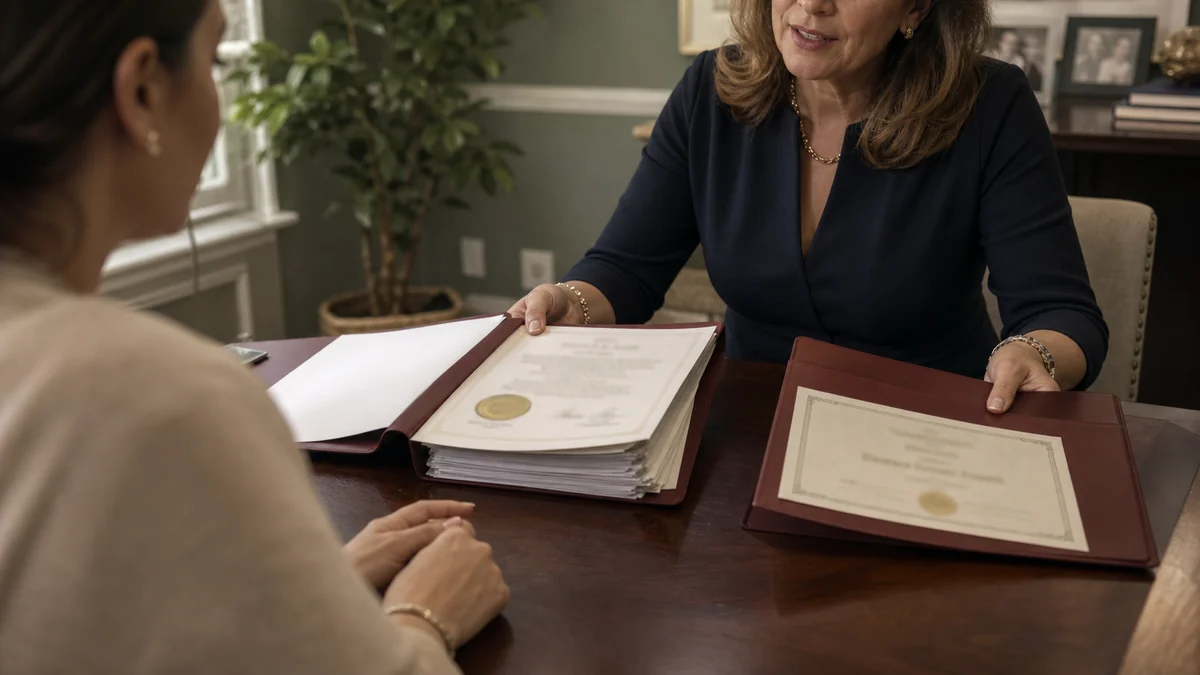
This page is the short, reference-style version of a distinction we consider essential context for anyone researching cosmetic or plastic surgery: the gap between "board certified plastic surgeon" and "cosmetic surgeon." They sound interchangeable. They are not, and the difference is entirely checkable in a few minutes.
Why the Title Isn't the Credential
In most US states, "cosmetic surgeon" carries no legal training requirement. A physician from virtually any specialty — dermatology, family medicine, dentistry, emergency medicine — can legally describe themselves as a cosmetic surgeon after limited weekend-course training, with no residency specifically in plastic or reconstructive surgery. Nothing about the phrase itself tells you what that person actually trained to do. A practice's marketing language, office decor, or self-described "expertise" is not a substitute for a checkable credential.
This gap exists because "cosmetic surgery" describes a category of procedures, not a licensed specialty with its own defined training pathway the way plastic surgery, dermatology, or ophthalmology are. A physician can legally perform many elective cosmetic procedures under the general scope of their medical license, provided they've had some training in the specific technique — but "some training" can range from a full surgical residency to a short weekend course, and the "cosmetic surgeon" label doesn't distinguish between the two. That ambiguity is precisely why this distinction sits at the top of nearly every page on this site.
State medical boards confirm that a physician is licensed to practice medicine; they do not, by themselves, confirm specialized surgical training in plastic surgery. A valid license is necessary but not sufficient when you are choosing someone to operate under general anesthesia or reshape tissue with permanent structural changes. Board certification in plastic surgery is the checkable standard that closes that gap — which is why verification takes minutes and belongs at the start of research, not the end.
Patients sometimes ask whether a surgeon trained abroad can hold US board certification — some can, after completing accredited US residency and passing the same examinations as domestically trained physicians. The relevant question is not where training began but whether the credential is active, specialty-specific, and verifiable through an official lookup today. Country of training and board certification status are separate facts; verify the latter directly every time.
What Certification Actually Requires
Board certified plastic surgeon is a different matter. It specifically means the surgeon completed an accredited plastic surgery residency — typically six or more years of surgical training after medical school — and passed rigorous written and oral examinations administered by a recognized certifying board, with ongoing recertification requirements to maintain the credential1. Related legitimate boards exist for specific scopes: facial plastic surgeons may hold certification from a facial-specific board, and eyelid specialists from an ophthalmic board. The common thread is that all of these are independently issued, checkable credentials — not self-descriptions.
It's worth being specific about what the exams themselves cover: written examinations test broad knowledge across the specialty, while oral examinations typically require the candidate to present and defend their own actual surgical case outcomes, including complications, in front of a panel of examiners. Recertification — required periodically to maintain active status — means the credential reflects ongoing standards, not a one-time test passed decades earlier. None of this is visible from a practice's marketing materials; it only becomes visible through direct verification.
How to Verify It Yourself
Recognized certifying boards maintain official, publicly searchable verification tools specifically so patients can confirm a physician's status directly, rather than relying on a claim made in an office or on a website — for example, the American Board of Plastic Surgery's public verification tool2. Search by the surgeon's full legal name, confirm the certification is specifically in plastic surgery (not an unrelated specialty), and check that it is current rather than expired. For the complete step-by-step walkthrough — including facility accreditation and hospital privileges — see our credential verification guide. Every relevant board, common marketing red flags, and how certification actually gets maintained over time are covered below.
For surgeons practicing outside the US, or US patients evaluating international credentials, ISAPS maintains an independent Find a Surgeon directory3 that can confirm society membership separately from a clinic's marketing claims. ISAPS membership is not equivalent to US board certification, but it is a checkable data point when national board names are unfamiliar. The verification habit matters more than any single database: always confirm credentials through a source the surgeon does not control.
Why This Matters for Any Procedure You're Considering
This distinction applies regardless of which specific procedure brought you to this site — facial, breast, or body surgery all carry the same underlying credentialing gap, because "cosmetic surgeon" is used loosely across every category of elective procedure. Treating credential verification as a five-minute, non-negotiable first step — before comparing prices, before reading testimonials, before anything else — is the single highest-leverage action you can take in this entire research process. It costs nothing, takes only a few minutes, and removes an entire category of risk before you've invested any time in a specific practice.
Board certification also does not guarantee a specific aesthetic outcome — it guarantees a defined training pathway and ongoing professional standards. Patients sometimes interpret a negative result as proof a surgeon "wasn't really qualified," when the more common issue is mismatch between expectation and anatomy, or normal variation in healing. Certification filters out an entire class of under-trained operators; it does not replace reading before-and-after photos critically, asking about typical results, or understanding procedural risks. Think of it as the mandatory first gate, not the only gate.
Verification should be performed through sources the practice does not control. Search the surgeon's full legal name in the relevant specialty board database, then confirm the active state medical license and any publicly available restrictions or disciplinary history. Match the name, location, and specialty carefully; similar names can produce the wrong record. Save the result or note the date because certification and license status can change.
Certification does not answer every safety question. Confirm procedure-specific hospital privileges when applicable, the accreditation of the operating facility, who provides anesthesia, and how frequently the surgeon performs the proposed operation. Society membership, training certificates, awards, and media appearances can add context but do not substitute for these independent checks. Treat every logo as a claim that should lead to a verifiable source.
Ask the surgeon to explain the training pathway in plain language and how it relates to your procedure. A legitimate answer should be specific about residency, board, current practice, and operating setting, not defensive or dependent on a title such as “top,” “expert,” or “cosmetic surgeon.” If the credential remains confusing after the consultation, pause and verify it before paying a deposit. The burden should not be on the patient to resolve vague wording under sales pressure.
Repeat the same checks if the named surgeon changes before the operation or if another clinician will perform part of the procedure.
Verify again before surgery.
Frequently Asked Questions
Is "cosmetic surgeon" a real medical specialty?
No. "Cosmetic surgeon" is not a recognized medical specialty or a protected title in most US states — it is a self-applied description that any licensed physician can use regardless of their residency training. Board certified plastic surgeon, by contrast, is a specific, verifiable credential tied to accredited surgical training.
What does board certified plastic surgeon actually require?
It requires completing an accredited plastic surgery residency, typically six or more years of surgical training after medical school, and passing rigorous written and oral examinations administered by a recognized certifying board. This is a defined, checkable standard — not a marketing claim.
Can a dermatologist or dentist legally call themselves a cosmetic surgeon?
In most US states, yes — because the title itself carries no legal training requirement. That is precisely why verifying actual board certification directly, rather than trusting a self-description, matters so much before booking any procedure.
Which related boards should I recognise besides ABPS?
For facial-only surgery, ABFPRS (American Board of Facial Plastic and Reconstructive Surgery) certifies otolaryngology-trained facial plastic surgeons. For eyelid and orbital procedures, ASOPRS (American Society of Ophthalmic Plastic and Reconstructive Surgery) is the recognised sub-specialty body. Boards to be cautious of are covered in the red flags section above.
Where do I actually check certification?
Use the official public verification tool from the certifying board directly, searching by the surgeon's full legal name. Our credential verification guide walks through this step by step, including facility accreditation.
Does this site rank or recommend board certified surgeons?
No. We do not rank, recommend, or endorse any specific surgeon or clinic, despite our domain name. Our role is limited to explaining what board certification means and how to verify it independently.