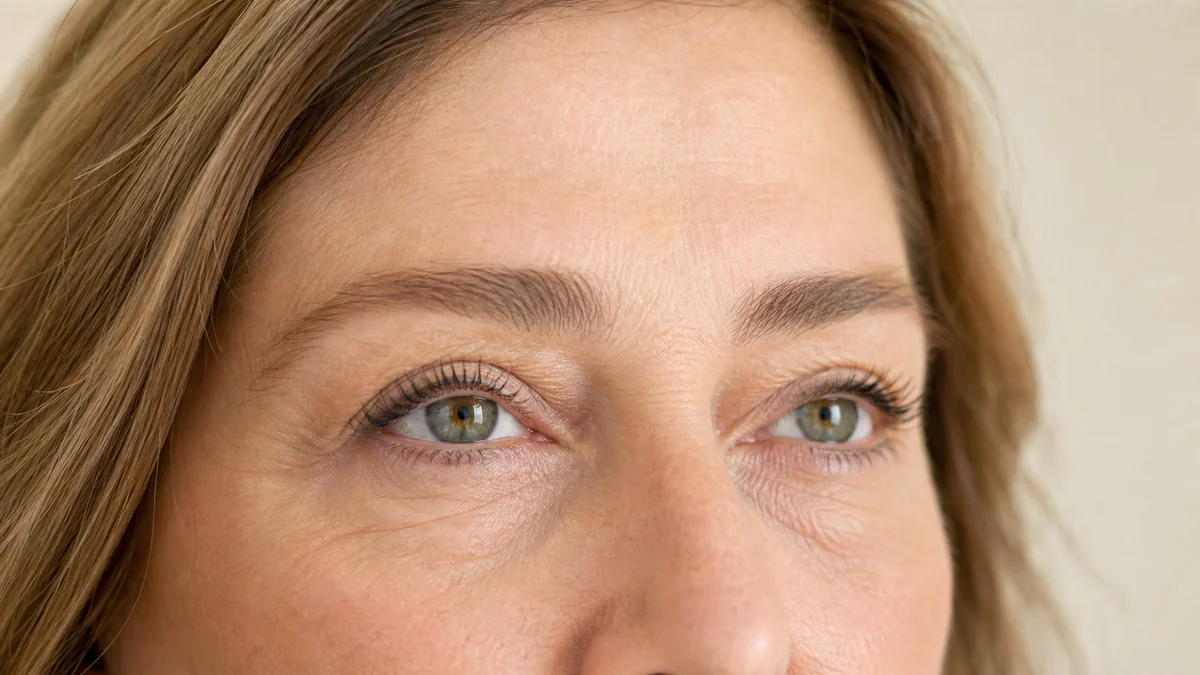
Blepharoplasty is one of the most commonly performed facial procedures in the United States — ASPS annual statistics consistently rank eyelid surgery among the top cosmetic facial procedures performed each year3 — and among the most frequently performed aesthetic procedures worldwide according to ISAPS international survey data.4 Some patients pursue it for a more rested, alert appearance; others have a genuine functional problem — heavy, drooping upper eyelid skin blocking part of their visual field. This guide covers both scenarios, the technical differences between upper and lower surgery, real recovery, and where non-surgical options fit in.
What Is Blepharoplasty?
Blepharoplasty is a surgical procedure that removes or repositions excess skin, underlying muscle, and sometimes fat around the eyelids. It can be performed on the upper eyelids, lower eyelids, or both in one session. The goal is to address dermatochalasis — lax, redundant eyelid skin that accumulates with age, sun exposure, and genetics — as well as fat pockets that create puffiness under the eyes.
It's worth distinguishing dermatochalasis from ptosis early, since patients frequently confuse the two. Dermatochalasis is excess skin draping over the lash line; ptosis is an actual drop in the eyelid margin itself, caused by a stretched or weakened levator muscle. The two can coexist, and a thorough consultation checks for both, since standard blepharoplasty only addresses skin — it does not correct true ptosis. See our guide on ptosis vs dermatochalasis for a deeper comparison.
The procedure sits at the intersection of cosmetic and functional medicine in a way few other facial surgeries do. Upper eyelid heaviness can cause compensatory brow elevation — patients unconsciously raise their brows to see better — contributing to forehead fatigue over time. When that skin also obstructs the superior visual field, the same operation can address both appearance and measurable vision impairment, which is why the functional-vs-cosmetic classification matters so much for insurance documentation.
Upper vs Lower Blepharoplasty
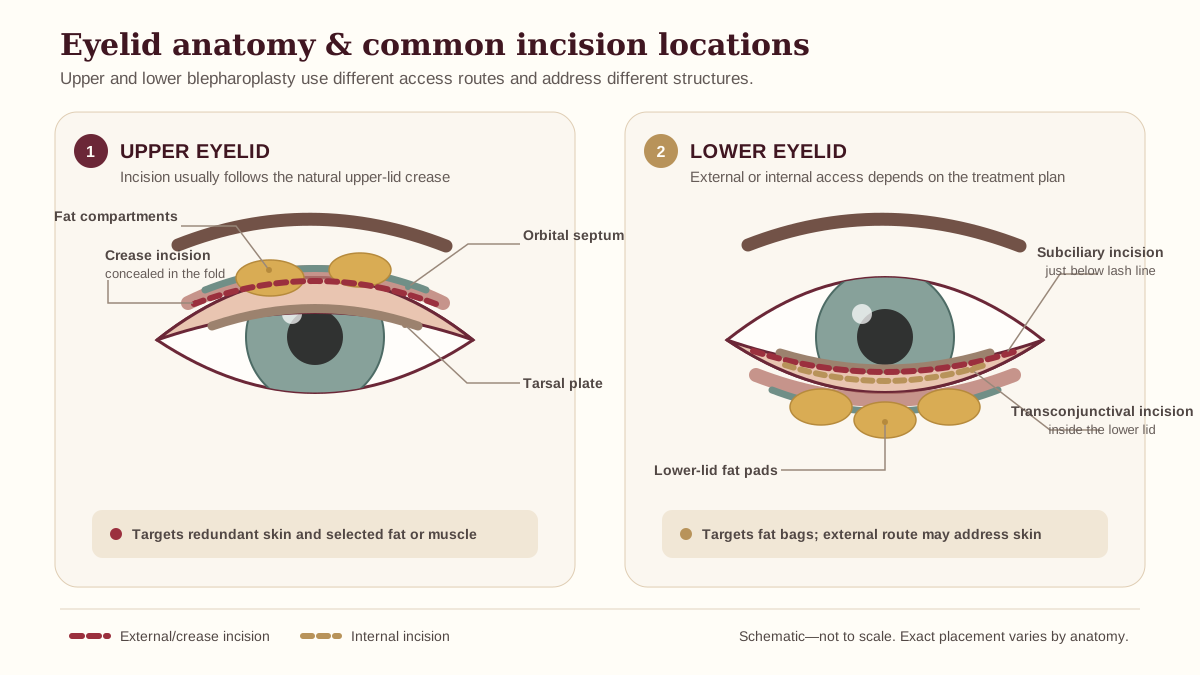
"Blepharoplasty" is an umbrella term covering two structurally distinct procedures that are sometimes combined.
Upper Blepharoplasty
Upper eyelid surgery removes excess skin — and sometimes a small amount of underlying muscle or fat — from the crease above the eye. It's the version most likely to have a genuine functional component, since heavy upper lids can physically obstruct the visual field. See our dedicated page on upper blepharoplasty for detail.
Lower Blepharoplasty
Lower eyelid surgery targets under-eye bags — bulging fat pockets — along with, in some cases, loose skin and mild hollowing. It's almost always considered purely cosmetic, since lower lid laxity doesn't obstruct vision. See our full page on lower blepharoplasty for the transconjunctival vs external comparison.
Combined Upper & Lower
Many patients in their 50s and older address both eyelids in one operation, since aging changes typically affect the whole eye area rather than a single lid — this adds some operative time and swelling but avoids a second recovery period down the line. The choice should follow anatomy rather than age alone: prominent under-eye bags with taut upper lids may need lower blepharoplasty alone, while heavy upper skin with minimal lower-lid fat may need upper only. Combined surgery makes sense when both layers contribute to the tired appearance — though only the upper portion can potentially qualify for insurance when visual field obstruction is documented.
Am I a Candidate?
Good candidates are generally healthy non-smokers with realistic expectations, whose main concern is excess eyelid skin, mild fat protrusion, or under-eye puffiness rather than deep wrinkles, brow position, or true ptosis. A thorough consultation evaluates brow position separately — a low, heavy brow can masquerade as upper eyelid excess. Dry eye disease, thyroid eye disease, and certain autoimmune conditions can also affect candidacy.
Age alone is not a strict cutoff — functional upper blepharoplasty is performed across a wide adult age range when visual obstruction is documented — but skin quality, healing history, and ocular surface health all factor in. Patients with significant dry eye may need optimization first, since altering eyelid anatomy can temporarily worsen dryness. Those with uncontrolled hypertension, bleeding disorders, or active eye infections need clearance first, and smokers are typically asked to stop for several weeks since nicotine impairs healing along the thin eyelid incisions.
Functional vs Cosmetic — When Insurance May Apply
This distinction is the single most important thing to understand before you book a consultation. Cosmetic blepharoplasty — improving appearance with no measurable vision impact — is not covered by insurance under any US plan. Functional blepharoplasty treats documented visual field obstruction from heavy upper eyelid skin, and may be covered when specific criteria are met.
To qualify as functional, most insurers require standardized visual field testing (often Goldmann or Humphrey perimetry) showing the eyelid skin blocks a defined percentage of the superior field, along with clinical photos demonstrating the obstruction. A systematic review of the functional literature found consistent improvements in visual field, headache frequency, and quality-of-life measures after surgery.1 One study using formal testing recorded an average nearly five-fold improvement in the superior field.2 Lower blepharoplasty essentially never qualifies as functional. See our insurance coverage guide for the documentation process.
The Procedure & Anesthesia
Most blepharoplasty is performed under local anesthesia with light IV sedation, letting the surgeon check symmetry as the patient opens and closes their eyes — though general anesthesia is also used for combined cases or patient preference. For upper eyelid surgery, the incision follows the natural crease, through which excess skin (and occasionally muscle or a small fat pad) is removed before closing with fine sutures. Lower eyelid surgery uses either a transconjunctival approach (no visible external scar) or an external incision below the lash line when skin also needs removal. The procedure typically takes 45 minutes to just over 2 hours.
Upper blepharoplasty planning involves marking excess skin with the patient's eyes open so the amount removed preserves full eyelid closure — removing too much is one of the most consequential technical errors here, since it can cause lagophthalmos and chronic dry eye. Lower blepharoplasty fat management varies: some surgeons remove protruding fat, others reposition it into the tear trough to address bags and hollowing at once. Transconjunctival technique suits younger patients with fat herniation but minimal skin laxity; an external subciliary incision allows simultaneous skin tightening when laxity is present.
| Factor | Upper Blepharoplasty | Lower Blepharoplasty |
|---|---|---|
| Primary target | Excess skin, drooping lid | Under-eye fat bags, mild skin laxity |
| Can be functional | Yes, if documented visual obstruction | Essentially never |
| Incision location | Natural eyelid crease | Inside lid (transconjunctival) or below lash line |
| Typical downtime | 7–10 days to be presentable | 7–14 days, slightly more bruising typical |
| Insurance eligible | Sometimes | No |
Recovery Timeline
Swelling and bruising peak in the first 48 to 72 hours, then decline steadily; most patients feel comfortable running errands by day 5 to 7 and return to work by day 7 to 10, often with light concealer for residual bruising. Full settling — subtle residual swelling and final scar maturation — continues over 3 to 6 months.
Days 1–3: Tightness, mild aching, and periorbital swelling that can temporarily limit full eyelid opening. Lubricating eye drops are commonly prescribed if eyes feel dry. Cold compresses in short intervals reduce bruising; avoid placing ice directly on incisions.
Days 4–14: Bruising transitions from purple to yellow-green before fading. Many patients feel presentable in public by the end of week two, though swelling persists, particularly after combined upper-and-lower surgery. Sutures, if not dissolvable, are typically removed around day 5 to 7.
Weeks 3–8: Residual swelling continues to resolve; incisions may appear pink before fading into the crease or lash line. Light exercise often resumes around weeks 3 to 4. Sun protection over periorbital skin protects maturing scars from hyperpigmentation.
Months 3–6: Final scar maturation completes the timeline. Asymmetry visible early in recovery often balances as both sides settle. Our complete eyelid surgery recovery timeline breaks this down day by day.
Risks & Complications
Blepharoplasty is generally low-risk when performed by an experienced, board-certified surgeon, but it is still surgery with real risks that deserve honest discussion: temporary or, rarely, persistent dry eye; asymmetry; visible scarring; lagophthalmos (difficulty fully closing the eyes) if too much skin is removed; and, in lower eyelid surgery specifically, ectropion or lid retraction. Rare but serious risks include retrobulbar hematoma, a bleeding complication that can threaten vision and requires emergency treatment. See our full risks and complications guide for a complete breakdown.
Every blepharoplasty patient should know the warning signs for retrobulbar hematoma — sudden painful proptosis (eye bulging), severe vision change, or intense pressure behind the eye in the hours after surgery requires immediate emergency care, not a next-day message. Lower blepharoplasty carries higher ectropion risk when lower lid laxity was present before surgery and not addressed with supportive tightening at the time. Choosing a surgeon who measures and documents how much upper skin can safely be removed, rather than relying on a generic template, is one of the most practical risk-reduction steps available.
Results: What's Realistic & How Long They Last
A well-executed blepharoplasty produces a more open, rested eye appearance without looking obviously "done" — the goal is proportion, not dramatic transformation. Because removed skin doesn't regenerate, upper eyelid results are considered long-lasting, often 10 to 15 years or more, though the surrounding face continues to age normally. Results aren't typically final until swelling has fully resolved, generally by the 3-to-6-month mark. See our blepharoplasty before-and-after guide for how to evaluate result photos critically.
Blepharoplasty does not stop the aging process — brows continue to descend, skin continues to lose elasticity, and new fat herniation can develop in the lower lids over years, usually less prominently than before surgery. Minor asymmetry is normal in untreated faces and can persist subtly after surgery; perfection-level symmetry isn't guaranteed or always desirable, since it can look artificial. Touch-up procedures are uncommon within the first decade for upper lids but may be considered if aging changes accumulate significantly.
How Much Does Blepharoplasty Cost?
Average total US cost — surgeon's fee, anesthesia, and facility fee — typically runs $4,500 to $7,500, with upper-only procedures at the lower end and combined surgery toward the higher end. Geography, surgeon experience, and whether it's bundled with another facial procedure all shift the number. When a case qualifies as functional, some or all of the upper eyelid portion may be covered, though the lower portion is typically billed separately as cosmetic. See our full eyelid surgery cost breakdown for an itemized look.
Non-Surgical Alternatives
For patients with mild concerns or who aren't ready for surgery, several non-surgical options can soften — though not replace — the effects of blepharoplasty. Neuromodulator injections can lift the brow tail slightly and soften crow's-feet, dermal fillers can address under-eye hollowing without removing fat, and radiofrequency or laser skin-tightening can produce modest improvement in mild laxity. None of these address true excess skin or significant fat herniation the way surgery does, and results are temporary, requiring repeat treatment.
The distinction matters in consultation: if the primary problem is redundant skin draping over the lashes, non-surgical tightening rarely produces a lasting change. If the concern is mild brow descent masquerading as upper lid heaviness, neuromodulators may be worth trying first — though they won't correct documented visual field obstruction. Lower-lid hollowing without prominent fat bags sometimes responds to conservative filler, but filler in the under-eye area carries its own vascular risk profile and requires an experienced injector.
Frequently Asked Questions
Is blepharoplasty painful?
Most patients describe tightness and pressure rather than sharp pain, typically managed with oral medication for the first few days. Discomfort peaks in the first 48 hours and drops off quickly — see our eyelid surgery recovery timeline for what to expect day by day.
Will insurance cover my eyelid surgery?
Only if you have documented functional impairment — typically a visual field test showing your upper eyelids obstruct your vision. Purely cosmetic surgery, and virtually all lower blepharoplasty, is not covered. Our insurance guide explains the documentation required.
How long does upper eyelid surgery take to heal?
Most visible bruising and swelling resolve within 10 to 14 days, and many feel comfortable in public with light makeup by then. Full settling can take several months — see our detailed recovery timeline for a week-by-week breakdown.
What's the difference between ptosis and dermatochalasis?
Dermatochalasis is excess, stretched eyelid skin that droops over the lash line, while ptosis is a drooping of the eyelid margin itself from a weakened levator muscle. They can occur together but require different corrections — a standard blepharoplasty removes skin, while ptosis repair tightens the muscle. Read our full comparison guide for how to tell them apart.
Can eyelid surgery fix dark circles or crow's feet?
Not reliably. Blepharoplasty addresses excess skin and fat pockets, but dark circles and crow's-feet are caused by different factors — pigmentation, thin skin, and muscle movement — that usually need separate treatments like topical therapy or neuromodulator injections.
How long do blepharoplasty results last?
Upper eyelid results commonly last 10 to 15 years or longer, since removed skin doesn't regenerate, though aging continues and skin can re-stretch gradually. Lower eyelid results are also long-lasting, though longevity varies with skin quality and sun exposure. See our before-and-after guide for realistic examples.