
One of the most consequential decisions in any cosmetic or plastic surgery journey happens before a single procedure is even discussed: verifying that the person about to operate on you is actually qualified to do so. This guide is entirely about teaching you to do that verification yourself — we are an independent educational resource, and we do not recommend, rank, or endorse any specific surgeon or clinic. What follows is a practical, step-by-step framework you can use for any surgeon you're considering, anywhere.
Board Certified vs "Cosmetic Surgeon" — the Critical Difference
This is the single most important distinction in this entire guide. Board certification in plastic surgery is a specific, defined credential: it requires completing an accredited plastic surgery residency (typically 6 years of surgical training after medical school) and passing both written and oral examinations administered by a recognized certifying board. "Cosmetic surgeon," by contrast, is not a protected or legally standardized title in most US states — a dermatologist, general practitioner, dentist, or physician from virtually any specialty can legally describe themselves as a "cosmetic surgeon" after limited weekend-course training, with no residency specifically in plastic or reconstructive surgery. A practice's marketing language, office decor, or self-described expertise tells you nothing reliable about actual training — only direct verification does.
ASPS patient guidance on choosing a qualified plastic surgeon4 aligns with this same principle: confirm board certification in the relevant specialty before evaluating technique, price, or testimonials. Marketing language and verified credentials answer different questions; conflating them is the most common — and most avoidable — mistake in cosmetic surgery research.
How to Check Certification Yourself
Recognized certifying boards for plastic surgery maintain official, publicly searchable verification tools specifically so patients can confirm a physician's certification status directly, rather than relying on claims made in an office or on a website — start with the American Board of Plastic Surgery's public verification tool1. To verify: search using the surgeon's full legal name, confirm the certification is specifically in plastic surgery (not a different, unrelated specialty), and check that the certification is current and not expired or revoked. Never treat a certificate displayed on an office wall as sufficient proof on its own — certificates can be outdated, and in rare cases, misrepresented. A five-minute independent lookup is a small effort relative to the decision you're making.
For international surgeons or overseas consultations, ISAPS maintains a public Find a Surgeon directory3 that confirms society membership independently of clinic marketing. ISAPS membership is not a substitute for national board certification, but it is a useful secondary check when you are evaluating credentials abroad. The principle is the same in every country: verify through a source the surgeon does not control.
Board certification is one layer, not the entire check. Search the physician's active state medical license through the relevant state medical board, confirm that the name and practice location match, and review any publicly available disciplinary or restriction history. Then verify the certification, license, hospital privileges, and facility as separate facts. A directory badge, society logo, or “board-certified” phrase on a biography should point you toward the independent record; it should never replace that record.
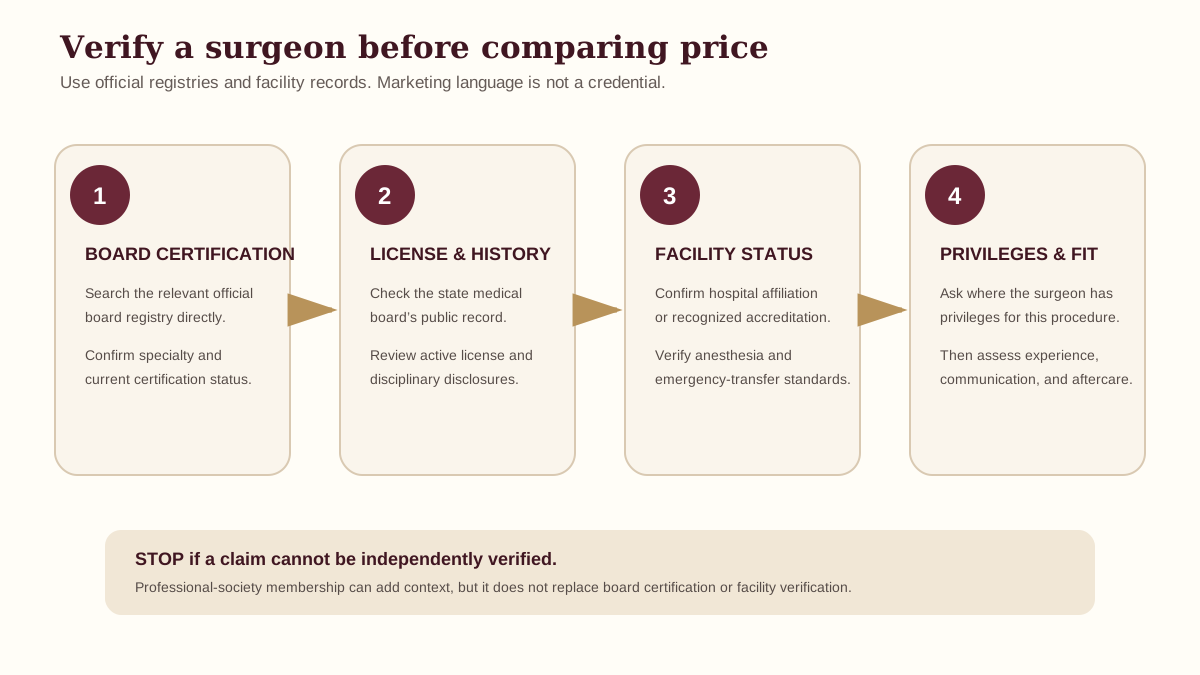
Facility Accreditation Matters
Surgeon credentials are only half the safety picture — where the surgery actually takes place matters just as much. An accredited surgical facility has been independently inspected against defined safety standards covering emergency equipment and protocols, sterilization practices, anesthesia safety, and staffing qualifications. An unaccredited, informal office-based surgical suite has none of these external checks, regardless of how professional it may look. Evidence-based guidelines for office-based plastic surgery emphasize facility accreditation, appropriate anesthesia staffing, and patient-selection criteria2 — the same categories worth confirming at consultation. Ask directly whether the facility carries a recognized accreditation, and treat evasive or vague answers to this specific question as a serious concern, not a minor detail.
Hospital Privileges — Why They Signal Safety
A surgeon who holds active hospital privileges to perform a specific procedure has been vetted by that hospital's credentialing committee — a peer-review process that independently evaluates training, experience, and competence for that exact procedure, separate from board certification itself. A surgeon who cannot perform a given procedure in a hospital setting, but offers it in an outpatient office, is a pattern worth questioning directly: ask why, and listen carefully to the answer. This doesn't mean every legitimate procedure must occur in a hospital, but privileging status for the specific procedure is a meaningful, independent data point worth asking about.
Questions to Ask at Consultation
- Are you board certified, and in which specific specialty?
- Do you hold hospital privileges to perform this exact procedure?
- Is the facility where you'll operate accredited, and by which organization?
- How many times have you personally performed this specific procedure?
- What is your protocol if a complication occurs during or after surgery?
- Who provides anesthesia, and what are their credentials?
For the complete, expandable checklist with follow-up questions for each answer, see our consultation questions guide.
Record the answers and verify them after the appointment. A credible consultation should leave you with the surgeon's full name, the exact operating-facility name, the anesthesia provider's role, and enough time to check each claim before paying a non-refundable deposit. If the person consulting you is not the person performing the operation, clarify who makes the surgical plan, who obtains consent, and who is responsible for postoperative decisions.
How to Read Before & After Photos Critically
Before-and-after galleries are curated marketing material by design — they showcase a practice's best, most photogenic outcomes, not a representative average. When reviewing any gallery, check whether lighting, pose, and camera angle are consistent between the before and after images, confirm how much time had elapsed (early post-op photos can look artificially dramatic due to swelling), and ask directly what percentage of the surgeon's patients achieve a comparable result versus a more modest one. Our dedicated guide to reading before-and-after photos critically goes deeper on this specific skill.
Red Flags
Certain patterns should prompt real caution regardless of how polished a practice's marketing appears: reluctance or evasiveness when asked to directly confirm board certification, pressure to book a procedure or pay a deposit before a genuine, unhurried consultation, pricing dramatically below the typical range for a given procedure without a clear explanation, and refusal to name or disclose the specific facility where surgery will actually take place. None of these alone is automatically disqualifying, but any combination of them warrants stepping back before proceeding. See our full red flags guide for the complete list with context for each.
Frequently Asked Questions
What does board certified actually mean?
Board certification in plastic surgery means a surgeon completed an accredited plastic surgery residency and passed rigorous written and oral exams administered by a recognized certifying board. It's a specific, verifiable credential — not a general description any surgeon can claim based on performing cosmetic procedures.
Is "cosmetic surgeon" the same as "board certified plastic surgeon"?
No, and this distinction matters enormously. "Cosmetic surgeon" is not a protected or standardized title in most US states — a physician from virtually any specialty can legally use it after a weekend course, with no residency training specific to plastic or reconstructive surgery. Always verify actual board certification directly rather than relying on how a practice markets itself.
How do I check if a surgeon is really board certified?
Use the official verification tools provided by recognized certifying boards, which let you search by the surgeon's name to confirm their certification status and specialty directly — never rely solely on a certificate displayed in an office or claims made on a practice website, since these can be outdated, misleading, or in a different, unrelated specialty.
Why does facility accreditation matter?
An accredited surgical facility has been independently inspected for safety standards including emergency equipment, sterilization protocols, and staffing — an unaccredited office-based surgical suite has none of these external checks. Facility accreditation is a separate verification from surgeon credentials, and both should be confirmed independently.
What questions should I ask at a consultation?
Ask directly about board certification and in which specialty, hospital privileges for the specific procedure being discussed, the facility's accreditation status, how complications are handled, and how many times they've personally performed the exact procedure you're considering. See our full consultation questions checklist for the complete list.
What are the biggest red flags when choosing a surgeon?
Major red flags include reluctance to confirm board certification directly, pressure to book quickly or pay a deposit before a real consultation, prices dramatically below the typical range, and a refusal to disclose the specific facility where surgery will take place. See our dedicated red flags guide for the complete list.