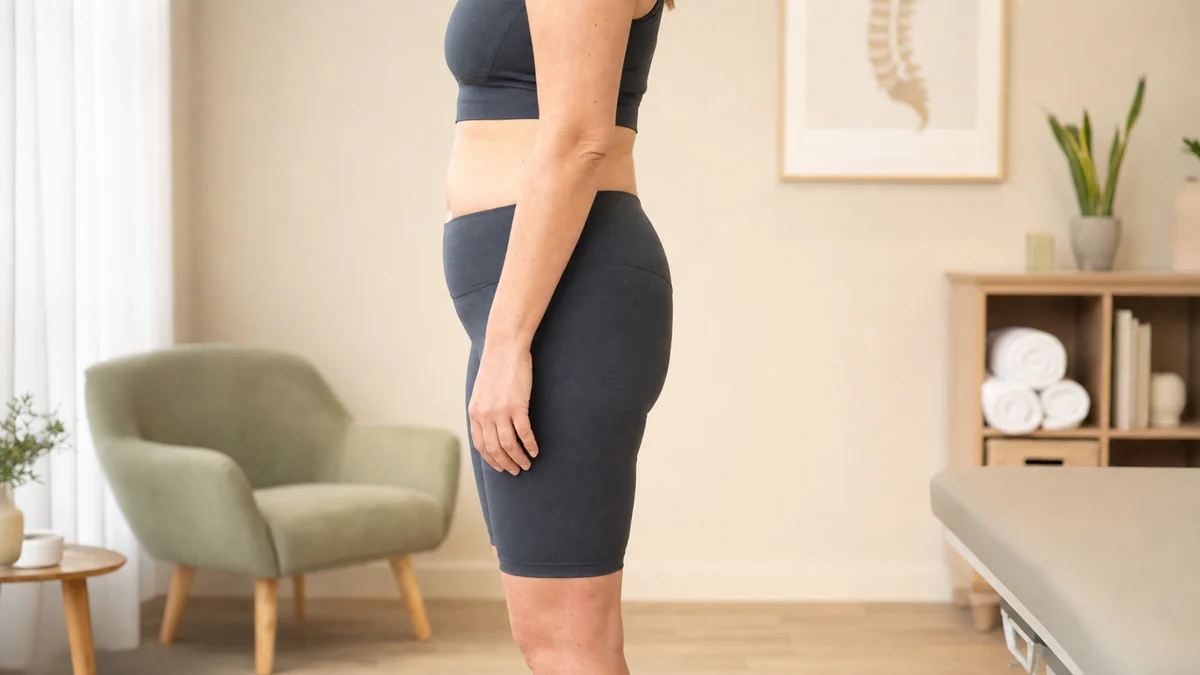
Brazilian Butt Lift is one of the most requested body-contouring procedures on this site4, and also one where safety technique matters more than almost any other decision you'll make. This page covers the full procedure overview — what it is, who it suits, how recovery works, and what results realistically look like — while treating safety as a first-class topic rather than a footnote. If you read nothing else before a consultation, read our dedicated BBL safety guide first.
What Is a BBL?
A Brazilian Butt Lift — more precisely called gluteal fat grafting — uses fat harvested from another part of your body via liposuction, processes it, and reinjects it into the buttocks to add volume, improve projection, and refine shape. Because it uses your own tissue rather than a synthetic implant, transferred fat can look and feel natural when it survives, and the liposuction component simultaneously contours common donor areas such as the abdomen, flanks, back, or thighs.
BBL is not the same as buttock implants, which use a solid silicone device placed surgically beneath the muscle. Implants may be considered when donor fat is insufficient, but they carry a different risk profile — including device-related complications — and produce a different feel. Most patients researching a "BBL" specifically want autologous fat transfer, not an implant, which is why understanding donor-fat availability early in the process matters.
The procedure sits at the intersection of liposuction and fat grafting: skill in both harvesting (preserving fat cell viability) and reinjection (even distribution, appropriate volume, correct plane) affects both safety and how much of the result persists long term. That dual skill requirement is one reason experience level and technique documentation matter more here than for many other cosmetic procedures.
Safety Comes First: Injection Plane
Gluteal fat grafting has, historically, carried one of the highest mortality rates of any cosmetic procedure — a risk overwhelmingly tied to fat being injected into or below the gluteal muscle rather than staying within the subcutaneous fat layer above it.1 When fat enters large veins within the muscle, it can travel to the lungs and cause a pulmonary fat embolism — a mechanism that explains why injection plane, not patient body size alone, has been the central safety variable in the published literature.
A 2026 Level III retrospective series of 7,000 cases performed with a strict subcutaneous-only protocol reported zero embolic events.3 That association supports the importance of injection plane, but it does not prove that any technique or individual operation is risk-free. Prospective ultrasound follow-up on subcutaneous-only grafting has also documented long-term retention in roughly the 65 to 82 percent range at 12 months — relevant both to safety culture around conservative technique and to setting realistic volume expectations.2 Before considering this procedure further, read our full BBL safety guide, which covers the data, what's changed, ultrasound guidance, and the exact questions to ask your surgeon.
Am I a Candidate?
Good candidates have enough donor fat available to harvest a meaningful volume, are in stable general health for a multi-hour surgery under general anesthesia, and have realistic expectations about both achievable volume and fat-survival percentages. Non-smokers heal more predictably; active smokers are typically asked to stop for a defined period before and after surgery because nicotine impairs blood supply to both grafted fat and liposuctioned donor sites.
Very lean patients have a lower achievable ceiling — there is simply less harvestable fat, and pushing volume beyond what donor sites safely allow can compromise both liposuction contour and graft survival. See our guides on what a skinny BBL realistically involves and reading BBL before-and-after photos in slimmer patients for how donor limitations show up in results. Patients with significant medical comorbidities, a history of thromboembolic events without clearance, or unrealistic volume demands may be better served by staging procedures or choosing alternatives after an honest consultation.
Age alone is not a disqualifier, but skin quality, weight stability, and surgical history all factor in. Prior abdominal surgery, for example, can affect whether the abdomen is an ideal donor site. A thorough consultation should include a physical assessment of donor sites, a discussion of your goal shape versus available fat, and explicit confirmation of subcutaneous-only injection technique.
The Procedure & Anesthesia
BBL is performed under general anesthesia in an accredited surgical facility, with continuous monitoring by a qualified anesthesia provider. Total operating time typically runs two to four hours depending on how many donor areas are treated, how much fat is harvested, and how much is reinjected — larger-volume cases toward the upper end of that range.
The surgical sequence generally follows three phases. First, liposuction harvests fat from agreed donor sites using techniques intended to preserve cell viability (gentle aspiration, appropriate cannula sizing). Second, the harvested fat is processed — commonly via centrifugation or filtration — to concentrate intact fat cells and remove excess fluid and oil. Third, the processed fat is reinjected into the buttocks in small aliquots across multiple passes, layer by layer within the subcutaneous plane, to encourage blood supply contact and reduce the risk of large, poorly vascularized pockets.
Donor-site selection is a shared decision: treating abdomen and flanks together is common when sufficient fat exists, but back, thighs, or arms may be included depending on your anatomy and goals. The liposuction component produces its own recovery considerations — bruising, swelling, and garment wear at donor sites — independent of buttock healing. The current joint safety statement supports real-time ultrasound during injection so the cannula tip can be seen above the gluteal fascia, alongside subcutaneous-only placement, appropriate credentials and facility standards, and direct postoperative responsibility by the operating surgeon.5
Recovery Timeline
BBL recovery has two parallel tracks: healing at the liposuction donor sites and protecting the grafted buttocks while transferred fat establishes a blood supply. The first two weeks are the most restrictive, because direct pressure on the buttocks can compress grafts before they vascularize, reducing survival and potentially distorting shape.
Days 1–3: Expect soreness at both donor sites and buttocks, swelling, and bruising. Pain is typically managed with oral medication; many patients describe donor-site soreness as more noticeable than buttock discomfort. Drainage garments or compression garments are worn per surgeon protocol. Walking short distances is encouraged early to reduce clot risk, but strenuous activity is off limits.
Days 4–14: Direct sitting on the buttocks remains restricted. Specialized BBL pillows that shift weight to the thighs, or prone/side-lying positioning, are used when sitting is unavoidable — including desk work or driving. Most patients can resume light daily activities within the first week, with many returning to desk jobs (with accommodations) by days 7 to 10. Swelling at donor sites and buttocks peaks early in this window then begins to decline.
Weeks 3–8: Sitting restrictions usually ease around the two-week mark, though your surgeon may advise gradual return rather than full normal sitting immediately. Light exercise often resumes around weeks 4 to 6; heavy lifting, running, and glute-focused training typically wait until weeks 6 to 8 or later. Compression garments continue for several weeks at donor sites.
Months 3–6: Residual swelling subsides and transferred fat that will survive has largely declared itself. The buttocks may appear slightly smaller than the immediate post-op swollen state — a normal part of fat-graft biology, not necessarily a sign of a poor result. Final contour refinement continues as skin adapts. See our broader post-surgery warning signs guide for symptoms that should prompt urgent contact with your team versus normal healing.
Results & Fat Survival
Not all transferred fat survives permanently. Fat cells that fail to establish a blood supply are reabsorbed by the body over the first several months — which is why immediate post-op size is not the same as long-term size. Published research on subcutaneous-only technique reports roughly 65 to 82 percent retention at 12 months, with retention tending to run lower as injected volume increases.2 Large-series data using strict protocols has reported average graft survival around 70 percent, consistent with that range.3
Shape matters as much as volume: a skilled injection pattern creates hip-to-waist transition, upper buttock fullness, and lateral contour rather than a single oversized projection point. Asymmetry can occur if survival differs side to side or if pre-existing asymmetry was not fully accounted for in planning. Weight fluctuations after surgery affect remaining fat cells — significant weight loss can reduce buttock volume; weight gain can increase it — so maintaining a stable weight helps preserve your result.
The final, settled shape is typically visible at three to six months once swelling has fully resolved. Before-and-after photos taken before that window can be misleading. See our guide on reading BBL before-and-after photos critically — including how lighting, angles, and timing affect what galleries show.
Risks & Complications
Beyond the injection-plane-related risk covered in our BBL safety guide, general surgical risks include infection, bleeding, fluid collection (seroma) at donor or recipient sites, asymmetry, contour irregularity, and fat necrosis (firm lumps from poorly surviving grafts, which may require monitoring or treatment). Liposuction-specific risks at donor sites include contour unevenness, prolonged numbness, and seroma.
Choosing a surgeon who can confirm subcutaneous-only technique in writing, operates in an accredited facility (AAAASF, AAAHC, or hospital-affiliated), and uses appropriate anesthesia monitoring addresses the majority of the procedure's most serious risk factors. Sudden shortness of breath, chest pain, or rapid heart rate in the days after surgery are emergency symptoms — call 911 rather than waiting to reach your surgeon's office. Our guide on verifying a surgeon's credentials explains how to confirm board certification before booking.
BBL demand has also made it a procedure sometimes offered in under-regulated settings. Prices far below local norms, procedures performed in non-accredited rooms, or reluctance to discuss injection plane specifically are warning signs independent of social-media marketing. Safety standards are not optional extras on this procedure — they are the baseline.
Cost
BBL in the US typically costs $6,000 to $12,000 total, including surgeon's fee, anesthesia, and facility fee. Higher injected volumes, multiple donor sites, combined procedures, and high-cost metro areas push toward the upper end. The quote should itemize what is included — pre-op labs, garments, follow-up visits, and revision policies vary by practice.
Because BBL combines liposuction and fat grafting, comparing quotes to liposuction alone or to butt implants is not apples-to-apples. A unusually low price that omits accredited facility fees or qualified anesthesia is a false economy on a procedure where technique and setting are safety-critical. See our dedicated BBL cost breakdown for how pricing compares across procedures on this site, and our financing guide if payment planning is part of your research.
Frequently Asked Questions
Is BBL the same as butt implants?
No — a traditional BBL uses your own fat, harvested by liposuction and re-injected, while butt implants use a solid silicone device placed surgically. Some patients with very little donor fat may consider implants instead, but the two are meaningfully different procedures with different risk profiles.
Is BBL safe?
BBL safety depends almost entirely on injection technique — fat placed strictly in the subcutaneous layer, never into the muscle, is associated with dramatically lower risk than historical intramuscular injection data. See our dedicated BBL safety guide for the full risk picture before booking any consultation.
How much fat do I need for a BBL?
Enough donor fat needs to be available in areas like the abdomen, flanks, back, or thighs to harvest a meaningful volume — very lean patients have a lower ceiling on how much can realistically be transferred. Your surgeon will assess your specific donor sites during a consultation to determine what's achievable.
How long does BBL recovery take?
Most patients avoid direct sitting pressure on the buttocks for about two weeks, using specialized pillows when sitting is necessary, with full activity typically resuming by six to eight weeks. Swelling takes longer to resolve, with the final result usually visible at three to six months.
How much does a BBL cost?
In the US, BBL typically costs $6,000 to $12,000 total, including the surgeon's fee, anesthesia, and facility fee, with variation driven by injection volume and geography. See our dedicated BBL cost breakdown for an itemized look at what drives the total.