Augmentation, lift, and reduction are three distinct breast procedures, but their recovery timelines share a common shape: a supportive garment for several weeks, a graded return to activity, and a final result that takes months to fully settle. This page walks through what's shared across all three and where they genuinely differ — particularly reduction, which carries more restriction due to the larger incisions involved. For procedure-specific detail, see breast augmentation, breast lift, and breast reduction.
The First Week
Across all three procedures, the first few days bring the most swelling, tightness, and discomfort, usually managed with prescribed or over-the-counter pain medication. Augmentation patients often describe a sensation of pressure or tightness across the chest as tissue stretches to accommodate the implant. Lift and reduction patients, who have more extensive incision work, typically report more soreness localized to the incision lines themselves rather than diffuse chest tightness. Most patients across all three take at least a few days fully off work, with light walking encouraged early to support circulation and reduce blood clot risk.
Garment Duration
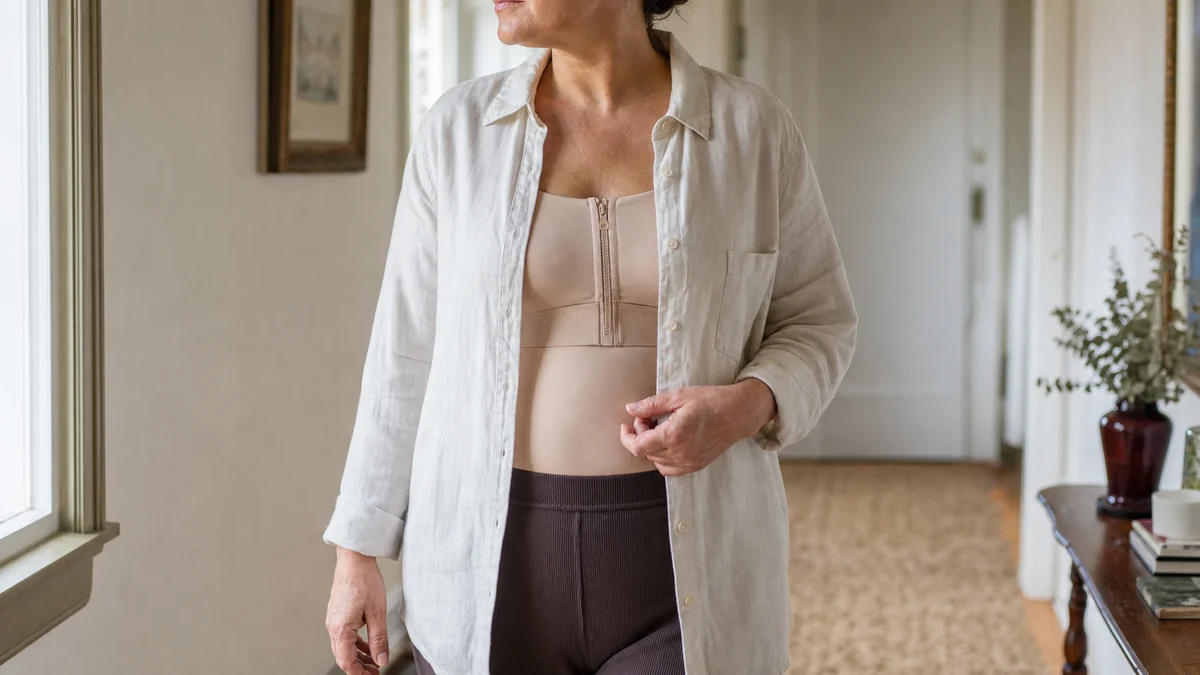
A supportive surgical or sports bra, worn continuously (including while sleeping), is standard across augmentation, lift, and reduction, and most surgeons ask patients to keep it on for 4 to 6 weeks. The garment reduces swelling, supports healing tissue, and helps the breast settle into its intended shape and position during the most active phase of healing. Skipping or removing the garment early is one of the more common avoidable mistakes patients make during recovery.
Where Recovery Genuinely Differs
Breast reduction often carries more restrictions than augmentation alone, and the reason is straightforward: it removes tissue and may use larger incision patterns, including an inverted-T pattern for some reductions, compared with augmentation's smaller access incisions. Individual restrictions still depend on the exact operation and surgeon instructions. Reduction patients may notice physical relief early because breast weight is reduced immediately, while augmentation without a simultaneous lift generally involves fewer tissue-removal steps.
| Factor | Augmentation | Lift | Reduction |
|---|---|---|---|
| Incision extent | Small, hidden | Moderate, around areola/vertical | Largest, often anchor pattern |
| Desk work | ~1 week | 1–2 weeks | 1–2 weeks |
| Garment duration | 4–6 weeks | 4–6 weeks | 4–6 weeks |
| Upper-body exercise | 4–6 weeks | 4–6 weeks | 6 weeks (upper end) |
| Notable early benefit | N/A | N/A | Back/neck pain relief within days |
| Final settled shape | ~3 months | 3–6 months | 3–6 months |
Return to Exercise
Light walking is encouraged within the first few days across all three procedures to support circulation. Upper-body exercise, running, and any activity that causes chest bouncing are typically restricted for 4 to 6 weeks, with reduction patients sometimes advised toward the longer end of that range given the more extensive incisions involved. Returning to high-impact exercise too early is one of the more common causes of increased swelling or, in rarer cases, wound complications during breast surgery recovery — patience through this window meaningfully protects the final result.
Final Settling
For augmentation, implants often begin in a slightly high, firm position and gradually shift downward and soften — sometimes called "drop and fluff" — with most of this settling complete by around 3 months. Understanding your implant's labeled characteristics helps you recognize normal settling versus a change worth flagging to your surgeon.3 For lift and reduction, swelling and firmness gradually soften over the following months, with breasts reaching their final, settled shape typically around 3 to 6 months. Scar maturation for lift and reduction incisions continues well beyond that, often 1 to 2 years, and silicone gel sheeting has evidence supporting its use in improving scar appearance during this window.2 This is covered in more depth in our general scar healing guide and procedure-specific breast reduction scars guide.
Return to Work, Exercise & Social Activity
Recovery timelines for breast surgery (augmentation, lift, or reduction) vary by individual healing speed, surgical scope, and whether you have a physically demanding job — but the milestones on this page reflect what most patients experience when they follow post-op instructions closely. Desk-based work often resumes sooner than jobs requiring heavy lifting, prolonged standing, or exposure to dust and debris near healing incisions. Strenuous exercise should stay on hold until your surgeon clears it; returning too early can prolong swelling, increase bleeding risk, or affect scar quality. For the financial side of planning, see our cost guide. Our procedure overview covers candidacy and technique; this page focuses purely on what happens after surgery.
Managing Expectations During Healing
One of the most common recovery frustrations is comparing your day-by-day progress to idealized before-and-after photos taken months after surgery. Early swelling, asymmetry, and stiffness are normal stages — not evidence that something went wrong. Keep follow-up appointments even when you feel fine; surgeons often spot subtle issues early that patients miss. Breast lift, augmentation, and reduction each have distinct recovery nuances — see our breast lift and breast reduction overviews for procedure-specific detail. If symptoms fall outside the normal patterns described here — fever, spreading redness, sudden severe pain, or possible blood-clot signs — see our warning signs guide immediately rather than waiting for a routine visit.
Compression garment compliance in the first six weeks supports contour and reduces fluid accumulation — follow your surgeon's garment schedule even when uncomfortable. Implant-based recovery adds implant-position checks at follow-ups; reduction patients focus more on incision care and activity restrictions protecting heavy breast tissue during early healing.
Plan around the most restrictive procedure in the operation, not the fastest timeline listed online. A breast lift adds skin incisions that must be protected from tension; implants may add muscle discomfort; reduction can involve a larger healing surface. When procedures are combined, the return-to-work date, lifting restriction, and garment plan should reflect all components. Ask for written limits that distinguish desk work, driving, overhead reaching, household lifting, and structured exercise.
Arrange the first week before surgery. Place frequently used items below shoulder height, prepare front-opening clothing, organize medication reminders, and identify someone who can drive and help with children, pets, laundry, or groceries. Patients often feel well enough to attempt more than the incisions are ready to tolerate. Practical support reduces repetitive reaching and lifting during the period when protecting the repair matters more than testing independence.
Track recovery by trend rather than by one photograph or one uneven day. Swelling can differ between sides, change with activity, and temporarily increase later in the day. Note pain, temperature, drainage, swelling, medication use, and activity so a change can be described accurately to the surgical team. Contact the practice when the overall direction reverses—especially with worsening pain, redness, drainage, fever, breathing symptoms, or a sudden one-sided change—rather than waiting for the next scheduled visit.
Frequently Asked Questions
How is breast reduction recovery different from augmentation or lift?
Breast reduction typically involves more restriction because it removes more tissue through larger incisions, often the full anchor pattern, compared to augmentation's smaller incisions or a standalone lift. Reduction patients also frequently notice faster relief from back and neck pain, sometimes within days, even while incisions are still healing.
How long do I wear a surgical bra after breast surgery?
Most surgeons ask patients to wear a supportive surgical or sports bra continuously, day and night, for 4 to 6 weeks across augmentation, lift, and reduction. This support reduces swelling, protects incisions, and helps breast tissue settle into its final position.
When can I return to exercise after breast surgery?
Light walking is usually encouraged within days, but upper-body exercise, running, and any activity that bounces the chest are typically restricted for 4 to 6 weeks across all three procedures. Reduction and lift patients with larger incisions sometimes wait toward the longer end of that range.
When do breast implants settle into their final position?
Implants often start in a slightly high, firm position and gradually shift downward and soften over weeks to months in a process sometimes called drop and fluff. Most patients see this settling largely complete by 3 months, though subtle softening can continue somewhat longer.
How long does swelling last after breast lift or reduction?
What breast surgery recovery symptoms need urgent attention?
Sudden significant swelling on one side only, fever, spreading redness, or a wound that opens are not normal healing and need prompt medical evaluation. Our general warning signs guide covers red flags across all cosmetic procedures, including calf swelling or shortness of breath that could signal a blood clot.