
Sagging is a natural consequence of pregnancy, breastfeeding, weight fluctuation, and simply the passage of time acting on skin elasticity — a breast lift is the surgical answer specifically to that positional change, distinct from procedures that address volume. Breast lift consistently appears among commonly performed breast procedures in ASPS annual statistics, reflecting sustained demand for mastopexy as a standalone or combined operation.2 This guide walks through exactly what a lift does, how to know if you need it (versus implants, versus both), what the honest trade-off around scarring looks like, and links to our breast surgery recovery guide and cost guide for mirror-page detail.
What a Breast Lift Does (vs Augmentation)
A breast lift raises and reshapes breast tissue that has descended, typically by removing excess stretched skin and repositioning the nipple-areola complex to a higher, more forward-facing position on the breast mound. Critically, a standard lift does not add volume — if the breast has also lost significant fullness (common after pregnancy or major weight loss), a lift alone can result in a breast that sits higher but still looks deflated. That's the key distinction from breast augmentation, which adds volume via implants without correcting sagging.
ASPS describes mastopexy as repositioning breast tissue and removing excess skin to restore a more youthful contour — not as a volume-increasing procedure.1 When both sagging and volume loss are present, surgeons often recommend augmentation-mastopexy in a single session rather than staging two separate surgeries months apart.
Do I Need a Lift, Implants, or Both?
Surgeons generally evaluate this by looking at where the nipple sits relative to the breast crease (inframammary fold): if the nipple sits at or below the fold, some degree of lift is usually needed regardless of volume concerns. If the main complaint is lost fullness with the nipple still positioned appropriately above the fold, augmentation alone may be sufficient. Many patients — particularly after pregnancy — have both sagging and volume loss, and combining a lift with implants (an augmentation-mastopexy) in one surgery is common and often more efficient than two separate operations. See our full breast lift vs implants comparison for the specific criteria used to decide.
A simple at-home check: stand in front of a mirror and note whether the nipple sits above, at, or below the inframammary fold line. Nipple-at-or-below-fold patterns usually indicate ptosis (sagging) that implants alone cannot fully correct. An in-person exam also assesses skin quality, areola size, and asymmetry — factors that influence technique choice beyond the nipple-position rule of thumb.
Augmentation-mastopexy is technically more complex than either procedure alone — implant placement must account for tightened skin envelope, and blood supply to the nipple must be preserved during tissue repositioning. Staged surgery (lift first, implants later, or vice versa) is sometimes recommended when the degree of correction is extreme or when blood-supply concerns make a single session higher risk.
Incision Types & Resulting Scars
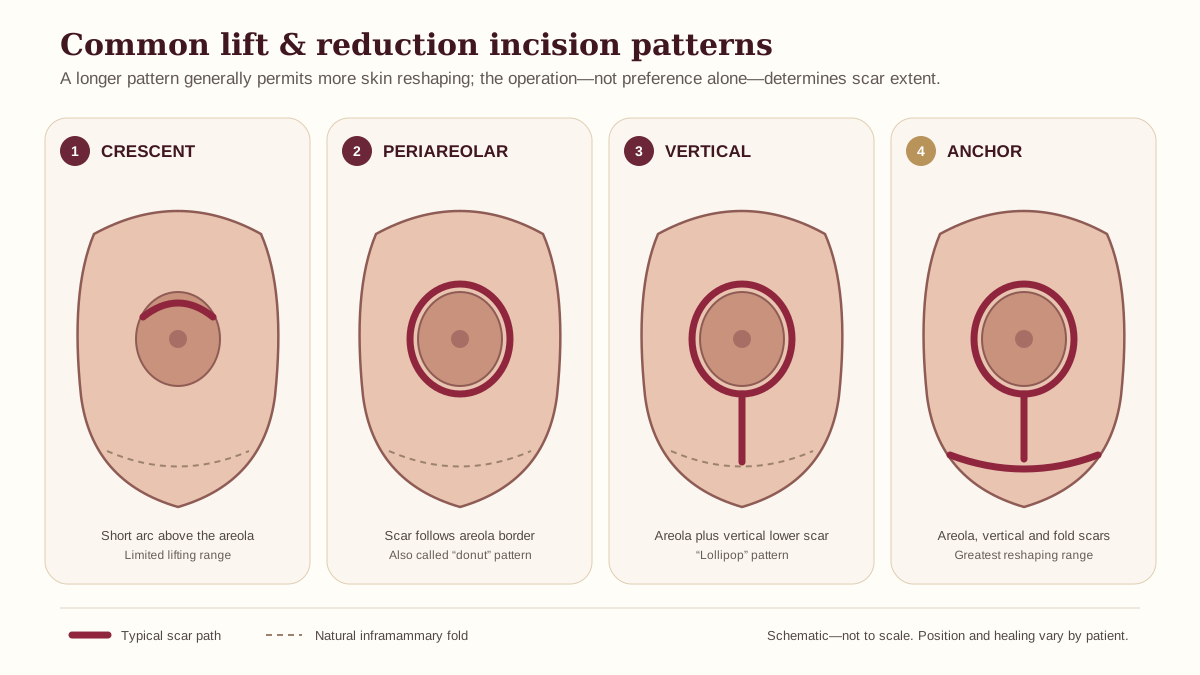
| Technique | Incision Pattern | Best For |
|---|---|---|
| Crescent lift | Small, around top half of areola only | Very minimal sagging |
| Donut (periareolar) lift | Full circle around the areola | Mild sagging |
| Lollipop (vertical) lift | Around areola + vertical line to the fold | Moderate sagging |
| Anchor (inverted-T) lift | Around areola + vertical line + horizontal fold line | Significant sagging |
It's important to be direct here: every breast lift technique leaves some permanent scarring — there is no scarless version of this surgery. The extent of the incision scales with how much tissue repositioning and skin removal is required, which is why an honest assessment of your degree of sagging (not just your stated preference for a smaller scar) determines which technique is appropriate. Scars typically start pink or red and fade to a paler, flatter line over 12 to 18 months, but they don't disappear completely. Evidence for silicone gel sheeting in scar management is limited but suggests modest benefit for some patients — worth discussing with your surgeon if you have a history of reactive scarring, without overstating what topical products can achieve.3
Candidacy & Timing
Good candidates have completed their family planning (since future pregnancy can reverse the results), are at a stable weight, are non-smokers, and understand the scarring trade-off described above. Timing matters: surgeons generally recommend waiting until you're done breastfeeding and your weight has been stable for several months, since ongoing changes in breast tissue can affect both the surgical plan and the durability of the result.
Patients with significant medical comorbidities, active smoking, or unrealistic expectations about scarlessness need individualized counseling before proceeding. A lift combined with implants adds implant-specific considerations — device choice, placement, and long-term monitoring — that a standalone mastopexy does not carry.
The Procedure & Anesthesia
Breast lift is performed under general anesthesia and typically takes 1.5 to 3 hours, depending on technique and whether implants are placed at the same time. After marking incision lines with you upright, the surgeon removes excess skin, reshapes the breast mound, and repositions the nipple-areola complex while preserving blood supply to the nipple. Internal sutures support the new shape; external closure follows the chosen pattern (periareolar, lollipop, or anchor). The procedure is outpatient in most cases.
Results & Longevity
A well-performed breast lift produces a natural, elevated breast contour that can last 10 to 15 years or longer for many patients, though — like any tissue in the body — breasts continue to respond to gravity, aging, weight changes, and hormonal shifts over time. Maintaining a stable weight and wearing supportive bras during high-impact activity can help preserve results longer, though some gradual change over many years is normal and expected regardless.
Areola size reduction is often incorporated into mastopexy when enlarged areolas accompany sagging — a detail sometimes overlooked in generic lift descriptions. Nipple sensation changes are common temporarily; permanent loss is uncommon but possible depending on technique and pedicle length. Patients who become pregnant after a lift may see recurrence of sagging; revision mastopexy is possible but involves repeating the scarring trade-off.
Choosing a Surgeon
Mastopexy requires judgment about incision pattern, nipple pedicle blood supply, and realistic scar placement — not just lifting tissue aggressively. Review photos of patients with similar pre-operative ptosis grade, ask how many mastopexies the surgeon performs annually, and confirm the operative plan addresses volume concerns if implants are or aren't included. See our credential verification guide for confirming board certification before booking.
Recovery
Most patients wear a surgical support bra continuously for several weeks after surgery and can return to desk work within 1 to 2 weeks, though heavy lifting and upper-body exercise are typically restricted for 4 to 6 weeks to protect the healing incisions. Swelling and firmness gradually soften over the following months, with the breast reaching its final, settled shape around 3 to 6 months post-surgery.
Days 1–7: Expect swelling, bruising along incision lines, and limited arm mobility. Sleep elevated; avoid submerging incisions until cleared.
Weeks 2–6: Gradual return to light activity; incisions remain pink but flattening begins. Nipple sensation changes — increased or decreased — are common and often improve over months.
Months 3–6: Final shape emerges as internal healing completes. See our full breast surgery recovery guide for week-by-week detail shared across breast procedures.
Risks & Complications
Beyond standard surgical risks (bleeding, infection, anesthesia reaction), mastopexy-specific concerns include asymmetry, delayed wound healing at T-junction points in anchor lifts, changes in nipple sensation, and — rarely — partial nipple necrosis if blood supply is compromised during repositioning. Scarring that becomes hypertrophic or keloid is more likely in patients with prior reactive scar history.
Cost
Average US cost for a standalone breast lift typically runs $6,000 to $10,000, with more extensive anchor-pattern lifts and combined lift-plus-implant procedures at the higher end. See our full breast lift cost guide for a detailed breakdown of surgeon fee, anesthesia, facility fee, and what combined augmentation-mastopexy adds to the total.
Staged surgery — lift now, implants later — may incur two sets of facility and anesthesia fees over time, which can exceed combined-procedure cost despite spreading recovery across two events. Your surgeon can model both options during consultation when volume and position both need correction. Combined augmentation-mastopexy in one session remains the most common approach when both sagging and volume loss are present after pregnancy or weight change.
Frequently Asked Questions
What's the difference between a breast lift and breast augmentation?
A breast lift repositions existing breast tissue and removes excess skin to correct sagging, without changing breast volume, while augmentation adds volume using implants without necessarily correcting position. Many patients with both sagging and volume loss combine the two in a single surgery — see our lift vs implants guide for how to decide. Staging versus combining affects total cost, recovery episodes, and scar pattern planning.
How do I know if I need a lift, implants, or both?
The general rule is that sagging (nipple position relative to the breast fold) points toward a lift, while lost volume with minimal sagging points toward augmentation — but most patients fall somewhere in between and benefit from an in-person evaluation. Our dedicated comparison guide walks through the specific criteria surgeons use.
Will a breast lift leave visible scars?
Yes — some permanent scarring is unavoidable with any breast lift technique, though the pattern and length depend on how much lifting is needed. Scars typically fade substantially and become less noticeable over 12 to 18 months, but they don't disappear entirely, which is an important expectation to set before surgery.
How long do breast lift results last?
Results are generally long-lasting, often 10 to 15 years or more, though breast tissue continues to respond to gravity, aging, and weight changes over time the same way it would without surgery. Pregnancy after a breast lift can significantly affect results, which is why timing relative to future pregnancy plans matters — completing family planning first produces the most durable outcome.
Can I breastfeed after a breast lift?
Many patients can still breastfeed after a lift, since most techniques preserve the connection between the nipple and underlying milk ducts and glandular tissue, but individual risk varies with the specific technique and amount of tissue repositioning involved. This should be discussed directly with your surgeon if future breastfeeding is a priority — pedicle length and nipple detachment risk affect the answer for your specific surgical plan.
How long is recovery after a breast lift?
Most patients return to desk work within 1 to 2 weeks, with heavy lifting restricted for 4 to 6 weeks. Final shape settles over 3 to 6 months — see our breast surgery recovery guide for week-by-week detail.
How much does a breast lift cost?
Average US cost for a breast lift typically runs $6,000 to $10,000, varying with the incision technique required and whether implants are added at the same time. See our dedicated breast lift cost guide for a fuller breakdown.