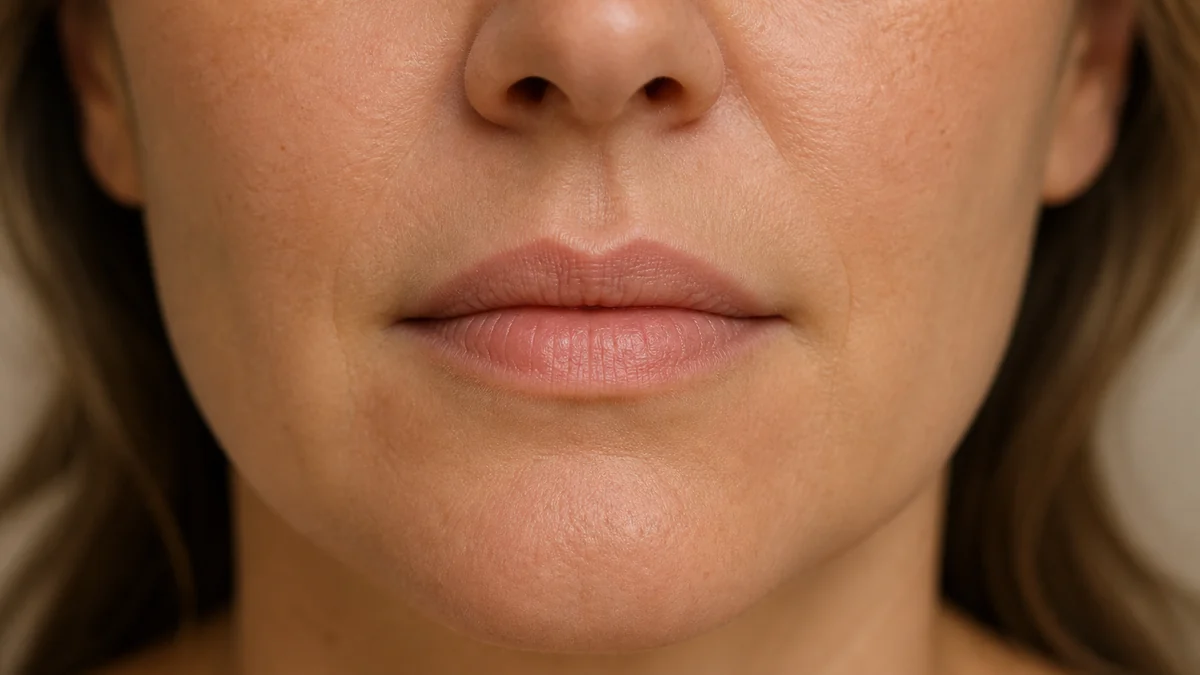
Lip lift is discussed as a permanent structural alternative or complement to temporary lip filler. ASPS procedural tracking includes broader lip-augmentation categories, but it does not provide a clean national count for surgical lip lift alone.2 Understanding the structural difference between a lip lift and filler is the key to choosing the right one for your goals — this guide covers philtrum shortening, scar placement, over-correction risk, technique variations, and candidacy for patients whose concern is proportion rather than volume alone.
What a Lip Lift Does
A lip lift shortens the philtrum — the vertical space between the base of the nose and the top edge of the upper lip — which has the effect of showing more of the pink upper lip (increasing "lip show") without adding volume. This is structurally different from adding fullness; it changes proportion, not size, which is exactly why it appeals to patients who feel their upper lip volume is fine but their lip appears hidden by excess space above it.
The ideal philtrum length varies by gender and facial proportion, but patients often seek a lip lift when the distance exceeds roughly 12 to 15 millimeters and the upper lip appears thin relative to that space — a pattern that can deepen with age as the lip thins and the philtrum lengthens.
Lip Lift vs Lip Filler
Filler adds temporary volume to the lip itself and does not change philtrum length; a lip lift changes philtrum length and does not add lip volume. Patients with a naturally long philtrum and reasonably adequate existing lip volume tend to be better served by a lift, while patients wanting more overall fullness with an already-average or short philtrum tend to do better with filler. Some patients combine both for a fuller change, though this should be planned deliberately, not layered on impulsively.
Fat transfer to the lips follows similar retention biology to other facial grafting — modest volume gain with partial long-term survival — making it a middle option between temporary filler and permanent philtrum shortening.3 Lip and perioral filler can cause complications ranging from temporary injection reactions to vascular compromise, infection, and delayed nodules; injector training and a complication-management protocol matter when comparing non-surgical alternatives.4
Technique Variations
The standard subnasal (bullhorn) lip lift removes a strip of skin along the base of the nose, elevating the upper lip. A corner lip lift addresses downturned mouth corners separately. A Italian lip lift uses two smaller incisions at the nostril bases rather than a continuous line — less tissue removed, subtler change. Technique choice depends on philtrum length, lip show goals, and scar tolerance.
The Scar: Where It Sits and How It Heals
The incision is placed at the base of the nose, following the natural curve where the nostrils meet the upper lip — a location that sits in a natural shadow and crease, which helps camouflage it as it heals. Most patients find the resulting scar quite inconspicuous within a few months, though — as with any incision — it is a genuine, permanent scar, not an invisible one, and individual healing varies with skin type and technique.
Candidacy
The best candidates have a visibly long space between the nose and upper lip along with reasonably adequate existing lip volume — a common pattern as the upper lip naturally thins and the philtrum lengthens with age. Patients whose primary concern is overall lip volume, rather than proportion, are often better served by filler or fat transfer instead.
Smokers, patients with active perioral herpes history without prophylaxis, and those with unrealistic expectations about scar invisibility need individualized counseling before surgery.
The Procedure & Anesthesia
Lip lift is typically performed under local anesthesia with sedation or general anesthesia and takes 30 to 60 minutes. After marking the planned excision with you sitting upright, the surgeon removes the skin strip, advances the upper lip, and closes with fine sutures. Precise measurement prevents over-correction — the central risk of this procedure.
Philtrum Length & Planning
Surgeons measure philtrum length in millimeters during consultation — typically with the patient sitting upright — and plan tissue removal against ideal proportions for your facial height and lip size. Removing two to four millimeters produces subtle change; more aggressive removal increases over-correction and "gummy smile" risk. Computer imaging or physical marking before surgery helps align expectations with achievable millimeter-level adjustment.
Recovery
Swelling and tightness peak in the first few days; most patients return to normal activity within a week. Sutures are typically removed around day 5 to 7. The scar remains pink for several weeks before fading. Final lip show and scar appearance settle over 2 to 3 months.
Risks & Over-Correction
Beyond standard surgical risks like infection or asymmetry, the most procedure-specific risk is over-correction — removing too much tissue and creating an unnatural, overly exposed "gummy" look with excessive lip show or difficulty with lip closure. Because the change is permanent, correcting an over-correction typically requires additional surgical revision, which is why choosing a surgeon experienced specifically in this procedure, rather than a generalist, matters more here than in some other facial procedures.
Scar hypertrophy at the subnasal incision, temporary upper lip numbness, and asymmetry in lip show between left and right sides are additional recognized complications. Precise pre-operative marking with the patient sitting upright — measuring philtrum length in millimeters — reduces over-correction risk compared with estimating tissue removal after anesthesia when facial animation is absent.
Choosing a Surgeon
Lip lift is a small-area procedure where millimeters matter. Surgeons who perform subnasal lip lifts regularly understand how much tissue removal produces natural lip show versus an over-exposed result. Ask how many lip lifts they perform annually and request photos of patients with philtrum lengths similar to yours — not just dramatic transformations on already-short philtrums.
Longevity
Results are permanent, since the underlying tissue is surgically shortened and does not return to its original length. This is a meaningful advantage over the repeat treatments filler requires, but it also means the decision deserves the same careful deliberation as any other permanent facial change. Patients considering rhinoplasty simultaneously should discuss how philtrum length interacts with nasal tip position — both affect the central face proportion.
Combining With Rhinoplasty or Chin Augmentation
Lip lift is sometimes planned alongside rhinoplasty or chin procedures when multiple central-face proportions need adjustment in one session. Sequencing matters: shortening the philtrum changes how the nose and upper lip relate visually, so computer imaging or careful marking during consultation helps align expectations across combined changes. See our chin augmentation guide when lower-face balance is part of the same consultation conversation.
Age & Timing Considerations
Lip lift candidates are often in their 30s to 50s as philtrum lengthening and upper lip thinning become noticeable with aging — though younger patients with genetically long philtrums also pursue the procedure. Waiting until facial growth is complete matters for younger patients. Perioral procedures require careful planning in active smokers, who face higher wound-healing complications along the subnasal incision.
Non-Surgical Alternatives
Lip filler adds volume without changing philtrum length — the opposite structural change from a lip lift. Patients wanting both fuller lips and shorter philtrum may combine procedures, but filler alone cannot replicate surgical lip show increase when the primary issue is excess space above the lip. Repeated filler over years costs more cumulatively than one-time lip lift for patients who know they want permanent proportion change — compare five-year filler cost against single surgical cost during consultation.
Cost
Lip lift in the US typically costs $2,500 to $4,500. See our cost guide for a broader comparison across procedures on this site. Corner lip lifts or combined subnasal plus corner procedures add operative time and may sit at the upper end of the range. Compare five-year filler maintenance cost against one-time surgical cost if you would otherwise repeat perioral injections indefinitely.
Results & What to Expect
Increased upper lip show is visible immediately after surgery, though swelling temporarily exaggerates the result for the first one to two weeks. Final lip show and scar appearance settle over two to three months. The change is permanent — unlike filler — which is advantageous for patients who want proportion correction without maintenance appointments, but requires confidence in the planned millimeter removal before surgery. Discuss desired lip show with your surgeon using photos and physical marking, not social-media references alone.
Frequently Asked Questions
Does a lip lift leave a visible scar?
Yes, a real scar exists at the base of the nose where the incision is placed, though it's positioned to sit in a natural shadow line and typically heals to become quite inconspicuous within several months. It does not disappear entirely, and skin type and healing can affect how visible it remains.
Lip lift or filler?
A lip lift makes a permanent structural change by shortening the space between the nose and upper lip, while filler adds temporary volume without changing that underlying proportion. Patients with a naturally long philtrum but adequate lip volume often benefit more from a lift; patients wanting more volume with a shorter or average philtrum often do better with filler.
Is a lip lift permanent?
Yes — the surgical shortening of the space between the nose and lip is a permanent anatomical change, unlike filler, which gradually resolves over months. This permanence is part of why candidacy and technique planning deserve careful discussion before surgery.
Can a lip lift be reversed?
Not in the way it can be undone — because it's a permanent surgical change, addressing an over-correction typically requires additional surgical revision rather than simple reversal. This is another reason to choose a surgeon experienced specifically in this procedure.
How much does a lip lift cost?
In the US, lip lift typically costs $2,500 to $4,500. See our cost guide for a broader comparison across procedures on this site.
Can a lip lift be combined with filler?
Yes, some patients choose to combine a lift with filler for both proportion and volume change, though this should be planned deliberately with your surgeon rather than added impulsively after the fact. Staging — lift first, filler after full healing — is sometimes safer than simultaneous treatment.
How long is lip lift recovery?
Most swelling resolves within one to two weeks; sutures come out around day 5 to 7. The scar at the base of the nose remains pink for several weeks before fading. Final lip show and scar appearance settle over two to three months.
Who is a poor candidate for lip lift?
Patients whose main concern is lip volume rather than philtrum length, those with very thin upper lips needing fullness rather than proportion change, and patients unwilling to accept a permanent subnasal scar are generally poor candidates. Filler or fat transfer may serve volume goals better.