
Of every procedure covered on this site, this is the one page we consider the most important to get exactly right. Brazilian Butt Lift (gluteal fat grafting) safety is not a marketing talking point — it is a documented, technique-dependent risk that patients deserve to understand in specific, unflinching detail before deciding whether and how to proceed. Nothing in this guide is intended to alarm unnecessarily, but nothing in it is softened either.3
Why BBL Has Drawn Safety Scrutiny
Gluteal fat grafting has, at points in its history, carried one of the highest reported mortality rates of any cosmetic surgical procedure — a fact that led major surgical societies to convene a dedicated task force to investigate why. A landmark survey of surgeons performing the procedure, covering nearly 200,000 cases, found that the risk was overwhelmingly concentrated in cases where fat was injected into or below the gluteal muscle, rather than staying within the subcutaneous fat layer above it.1 This single anatomical distinction explains most of the historical danger associated with this procedure.
The Core Safety Rule: Injection Plane
Here is the anatomical mechanism in plain terms: the gluteal muscle contains a rich network of large veins. If fat is injected into or beneath the muscle, it has a direct path into those veins, and from there into the bloodstream, where it can travel to the lungs and cause a fat embolism — a blockage that can be rapidly fatal. Fat injected exclusively into the subcutaneous layer — the fat layer that sits above the muscle, just beneath the skin — does not have this direct vascular access, which is why subcutaneous-only technique has become the defining safety standard for this procedure. There is no gray area on this point in the current safety literature: this is the single most important question to ask any surgeon performing a BBL.
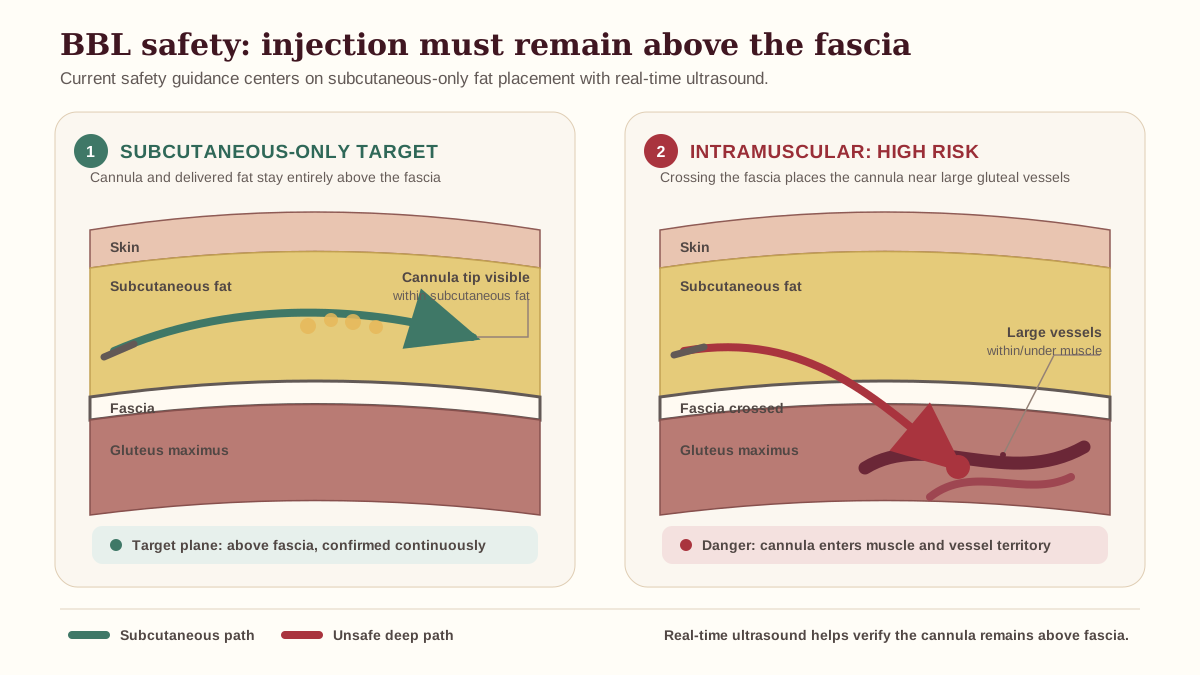
What Has Changed: Ultrasound Guidance & Updated Guidelines
In response to the task force findings, current multisociety guidance supports subcutaneous-only injection and real-time ultrasound visualization of the cannula during injection.4 A 2026 retrospective series using a strict subcutaneous-only protocol reported an estimated 70% average fat graft survival and zero fatal or non-fatal embolic events across 7,000 cases.2 This is supportive Level III observational evidence that technique and perioperative protocols matter; it does not prove that BBL is risk-free or that the same outcome will occur in every setting.
Facility Accreditation & Anesthesia Standards
Injection plane is the single biggest factor, but it isn't the only one. An accredited surgical facility (AAAASF, AAAHC, or hospital-affiliated) with appropriate emergency equipment and staffing, combined with a board-certified anesthesia provider monitoring the patient continuously throughout the procedure, are baseline safety standards that apply to any major cosmetic surgery, BBL included. A rock-bottom price that appears to skip any of these standards is a red flag regardless of how experienced the surgeon claims to be.
Accreditation should be verifiable through the accrediting organization's own directory, not accepted from a logo on a clinic website. Ask who remains responsible for anesthesia throughout the operation, whether that person has any simultaneous duties, and what the facility's emergency-transfer plan is. These questions test the entire safety system around the surgeon — monitoring, staffing, equipment, and escalation — rather than relying on the surgeon's reputation alone.
Volume Limits and Why "More" Isn't Better
Requesting the maximum possible fat volume — often driven by wanting a more dramatic result — introduces its own independent risk, separate from injection plane. Larger injected volumes are associated with a higher likelihood of complications generally and, per fat-survival data, tend to show proportionally lower long-term retention as a percentage. A surgeon who pushes back on a volume request that exceeds what your available donor fat and anatomy can safely support is not being conservative for no reason — they're managing a real risk trade-off. Risk from injection plane also does not scale down simply because the requested volume is smaller — see our guide on what a "skinny BBL" realistically involves for how donor-fat limits and safety considerations interact. Related: our guide on how to read BBL before-and-after photos covers how volume choices show up (or don't) in gallery images.
Questions to Ask Before Booking a BBL
- Can you confirm, in writing, that your injection technique is subcutaneous-only?
- Do you use ultrasound guidance during fat injection?
- Is the surgical facility accredited, and by which organization?
- Who administers and monitors anesthesia, and what is their credential?
- What is your personal complication rate for this specific procedure?
A surgeon who answers these questions directly and specifically — not defensively — is demonstrating exactly the transparency this procedure requires. See our broader guide on verifying a surgeon's credentials for how to check board certification before any consultation.
The consultation should end with a safety plan you can repeat back clearly, not only an aesthetic promise or a target number of transferred fat.
Ask for procedure-specific answers rather than general assurances that the practice has “never had a problem.” The useful discussion is operational: how the subcutaneous plane is confirmed, who watches the ultrasound image, how many BBLs the surgeon performs, what volume is appropriate for your anatomy, and how complications are tracked. A written postoperative plan should also identify the after-hours contact, the nearest emergency facility, and which symptoms bypass the office and require immediate emergency care.
Warning Signs After Surgery
Sudden shortness of breath, chest pain, a rapid heart rate, or noticeably low oxygen saturation in the days following surgery are potential signs of a pulmonary embolism and constitute a medical emergency — call 911 or go to the nearest emergency room immediately rather than waiting to reach your surgeon's office. Less urgent but still important warning signs include spreading redness, fever, or unusual drainage at incision or injection sites, which should prompt a same-day call to your surgical team.
The person accompanying you after surgery should know these warning signs too, because a recovering patient may minimize symptoms or be affected by pain medication. Keep the procedure name, surgery date, medication list, and surgeon's contact details readily available for emergency clinicians. Contacting the surgical team can happen in parallel, but it should never delay emergency assessment when breathing or chest symptoms are present.
Frequently Asked Questions
How dangerous is a BBL?
Gluteal fat grafting has historically carried an unusually serious risk of pulmonary fat embolism, primarily when fat enters vessels through injection into or below the gluteal muscle. Strict subcutaneous-only technique and real-time ultrasound are central safeguards. One large recent series observed no embolic events, but that does not mean the risk is eliminated in every setting.
What is the BBL death rate?
Older task-force survey data reported mortality rates that made BBL one of the highest-risk cosmetic procedures at the time, tied specifically to deep intramuscular fat injection. A subsequent 7,000-case series using a strict subcutaneous-only protocol reported zero fatal or non-fatal embolic events, illustrating how dramatically technique changes the real-world risk — there is no single current "death rate" that applies regardless of technique.
What makes a BBL safer?
The single most important safety factor is a strict subcutaneous-only injection technique — fat placed only above the muscle, never into or below it — combined with an accredited surgical facility, appropriate anesthesia monitoring, and conservative injection volumes. Ask your surgeon directly, in writing if possible, whether their technique is subcutaneous-only.
Is ultrasound guidance necessary?
It is increasingly recommended as a best practice by surgical safety task forces because it allows the surgeon to visually confirm the injection plane in real time rather than relying on feel alone. Not every experienced surgeon uses it, but its growing adoption reflects a broader industry shift toward objectively verifying subcutaneous-only placement rather than assuming it.
Does a smaller BBL carry less risk?
Risk from injection plane doesn't scale down simply because the requested volume is smaller — the anatomical danger of intramuscular injection exists regardless of how much fat is used. Volume does independently affect fat-survival percentages and overall complication likelihood, but it is not a substitute for confirming subcutaneous-only technique.
What should I do if I notice warning signs after surgery?
Sudden shortness of breath, chest pain, or low oxygen levels require an immediate call to 911 or a trip to the nearest emergency room — do not wait to reach your surgeon's office for these specific symptoms. Less urgent concerns like spreading redness or fever should prompt a same-day call to your surgical team.