
"Silicone, saline, gummy bear" — the terminology around breast implants can sound like three totally different products, but the practical variables are the fill material, gel cohesivity, shell surface, and implant shape. FDA patient-labeling guidance distinguishes device materials and their different monitoring and risk considerations.2 Understanding these variables independently, rather than as marketing categories, makes the conversation with your surgeon far more productive.
The Main Implant Types
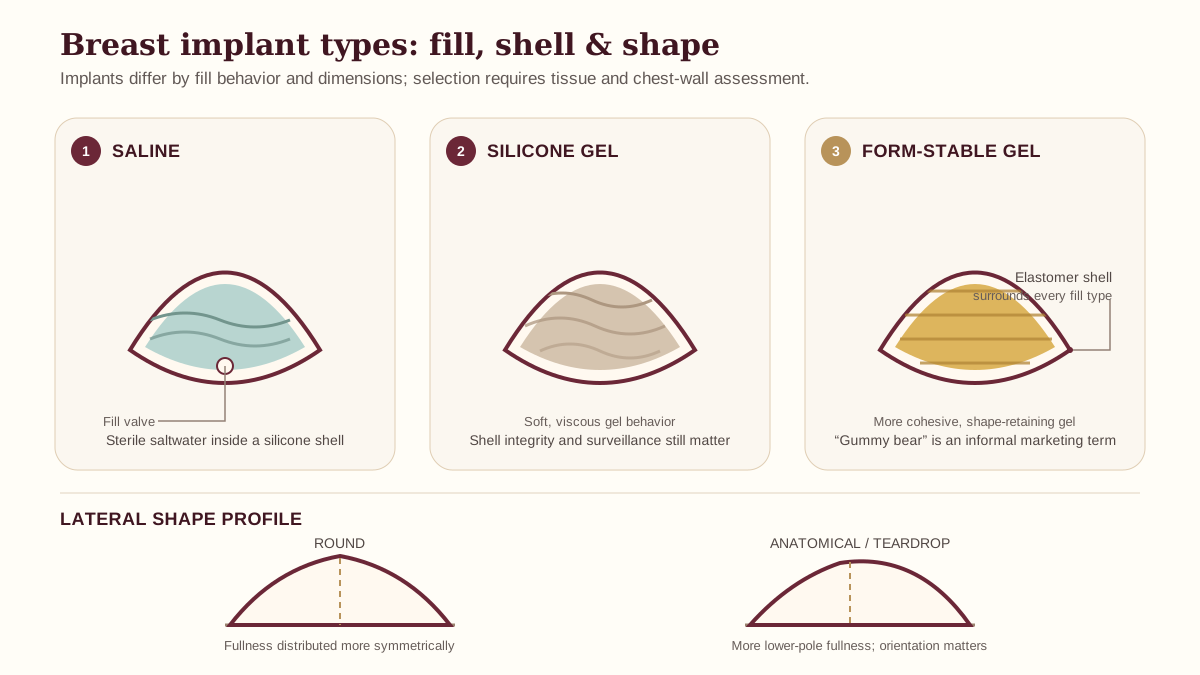
Saline
Saline implants are filled with sterile saltwater inside a silicone shell, and they can be inserted empty and filled after placement, which allows for a smaller incision. If a saline implant ruptures, the shell simply deflates and the body harmlessly absorbs the saline, making a rupture immediately obvious — an advantage some patients prefer for peace of mind.
Silicone Gel
Silicone gel implants are filled with a cohesive silicone gel designed to closely mimic the feel of natural breast tissue. Because a silicone rupture is not always immediately visible or felt — sometimes called a "silent rupture" — the FDA and manufacturers recommend periodic imaging to check implant integrity over time, discussed further below.
"Gummy Bear" (Form-Stable Cohesive Gel)
"Gummy bear" implants are not a separate implant category — they're a nickname for a specific type of silicone gel implant using a more cross-linked, highly cohesive gel that holds its shape and springs back when pressed, much like the candy. This form-stability is what allows these implants to reliably hold an anatomical, teardrop shape rather than a round one, since a less cohesive gel would shift and lose that contour with gravity and movement.
Shape: Round vs Anatomical (Teardrop)
Round implants create fullness that's roughly even across the upper and lower breast and tend to look similar regardless of minor rotation, since they're symmetrical. Anatomical (teardrop) implants are shaped to taper toward the top, mimicking a more natural slope — but because they aren't symmetrical, any rotation of the implant inside the pocket can visibly distort the result, which is one trade-off worth discussing with your surgeon.
Shape alone does not determine whether a result looks natural. Chest width, existing breast tissue, skin elasticity, implant profile, and placement all change how the same device appears on the body. A round implant can produce a subtle slope in one patient, while an anatomical implant may still look prominent on another. Comparisons are most useful when the patient's starting anatomy resembles your own.
Texture: Smooth vs Textured
Smooth-shelled implants move somewhat freely within the breast pocket and tend to feel softer, while textured shells were originally designed to reduce implant rotation and encourage tissue adherence. However, textured implants have a well-documented, elevated association with breast implant-associated anaplastic large cell lymphoma (BIA-ALCL), a rare T-cell lymphoma that develops in the scar tissue capsule around the implant.1 A 2024 multidisciplinary consensus statement from the American Association of Plastic Surgeons outlines updated recommendations on implant surface risk stratification, patient surveillance, and early diagnosis.1 This is a genuine, well-established risk conversation that should happen before choosing a textured device — not a reason for panic, but a reason for informed choice and follow-up.
Understanding Sizes: CCs, Profile & Base Width
Implants are sized in cubic centimeters (cc) of volume, not bra cup letters — a common source of confusion in consultations. There is no fixed, universal conversion between cc and cup size, because the resulting cup size depends on your band size, chest wall width, and how much natural breast tissue you already have. "Profile" (low, moderate, high, or ultra-high) describes how far the implant projects forward relative to its base width, and base width itself must fit your existing chest measurements — an implant that's too wide for your frame can look unnatural regardless of cc volume.
| Variable | Options | Mainly Affects |
|---|---|---|
| Fill material | Saline / Silicone gel | Feel, rupture detection, incision size |
| Gel cohesiveness | Standard / Form-stable ("gummy bear") | Shape retention, ability to hold teardrop shape |
| Shape | Round / Anatomical | Upper pole fullness, rotation risk |
| Shell texture | Smooth / Textured | Rotation resistance, BIA-ALCL risk profile |
| Volume | Measured in cc | Final size, not directly cup size |
Placement: Over vs Under the Muscle
Implants can be placed above the chest muscle (subglandular) or beneath it (submuscular/dual-plane), a decision that affects how natural the upper breast slope looks, recovery discomfort, and how well the implant is disguised for thinner-tissue patients. This is typically decided during your consultation based on your existing tissue thickness and aesthetic goals rather than a generic default.
Above-muscle placement avoids manipulating the chest muscle and may suit patients with enough tissue to cover the implant edges. Under-muscle or dual-plane placement adds coverage over the upper implant, which can be useful in thinner patients, but muscle movement and a more involved early recovery become part of the trade-off. Neither plane is universally superior; the correct choice depends on anatomy, activity, implant dimensions, and the specific result being planned.
How Long Do Implants Last?
Breast implants are not lifetime devices. Rupture risk increases gradually the longer an implant has been in place, and capsular contracture, size dissatisfaction, or a desired style change also lead many patients to pursue revision surgery over time. Manufacturers and surgeons don't promise a fixed expiration date, but you should plan for the reasonable likelihood of at least one additional surgery — replacement, revision, or removal — at some point during your life. See our breast implant removal guide for what that process involves.
Safety Monitoring: Recommendations
Because silicone implant rupture isn't always symptomatic, FDA guidance recommends periodic ultrasound or MRI beginning five to six years after surgery and every two to three years thereafter.2 Your clinician may individualize that schedule. For textured implants, follow-up conversations also include awareness of BIA-ALCL warning signs — most commonly late swelling or fluid collection — and prompt evaluation is central to consensus management guidance.1
If You're Concerned About Implant Illness
Breast implant illness (BII) refers to a cluster of systemic symptoms — fatigue, joint pain, brain fog, and others — that some patients with implants report, but it is not a single, well-defined diagnosis in the way BIA-ALCL is, and the causal evidence connecting specific symptoms to implants is still evolving. It's important not to conflate BII with BIA-ALCL: one is a diagnosable lymphoma with clear diagnostic criteria, the other is a symptom cluster under ongoing study. If you're experiencing concerning symptoms, a candid conversation with your surgeon and primary care doctor — including whether explant is appropriate for you — is the right next step, not self-diagnosis from online forums.
Choosing With Your Surgeon: What to Ask
Before deciding on a specific implant, it's worth directly asking your surgeon which fill material, shape, texture, and placement they recommend for your anatomy and why, what their personal revision rate has been, and how they handle long-term monitoring and rupture screening. A surgeon who explains trade-offs clearly — rather than pushing a single "best" option — is demonstrating exactly the kind of transparency this decision deserves.
Bring goals rather than a device prescription: describe the proportion, upper-pole fullness, and profile you want, then ask how the proposed base width and projection fit your chest measurements. Request the manufacturer patient booklet for the exact implant under consideration and read it before consenting. The decision includes both the initial appearance and a long-term plan for surveillance, possible revision, and eventual removal or replacement.
Frequently Asked Questions
What are gummy bear implants?
"Gummy bear" is a nickname for form-stable, highly cohesive silicone gel implants, named because the thicker gel holds its shape and returns to form when pressed, similar to a gummy candy. They're not a separate device category from other silicone implants — the term describes the gel's consistency.
Silicone vs saline — which is better?
Neither is universally "better" — silicone gel generally feels and looks more like natural breast tissue, while saline implants use a smaller incision and make a rupture immediately obvious. The right choice depends on your anatomy and monitoring plans; see our breast augmentation guide for more.
How many cc's equal a cup size?
There's no fixed universal conversion, because cup size depends on band size, chest shape, and existing breast tissue, not cc volume alone — roughly 150 to 200cc is commonly associated with about one cup size change, but this varies significantly between patients.
How long do breast implants last?
Breast implants are not considered lifetime devices — many patients will need a revision or replacement surgery at some point due to rupture, capsular contracture, or simply a desired style change. See our implant removal guide for what that process involves.
Are textured implants safe?
Textured implants have been specifically linked to breast implant-associated anaplastic large cell lymphoma (BIA-ALCL), a rare T-cell lymphoma, which is why plastic surgery societies have issued specific surveillance and risk-disclosure guidance around them. Smooth implants carry a substantially lower reported association with this condition.
Is breast implant illness the same as BIA-ALCL?
No — they are different and shouldn't be confused. BIA-ALCL is a specific, diagnosable cancer of the immune system with defined diagnostic criteria, while breast implant illness (BII) refers to a cluster of systemic symptoms some patients report, for which the causal evidence is still evolving.