
A breast lift is commonly confused with breast augmentation, largely because "before and after" photos rarely explain what's actually being changed. If you're comparing your own anatomy to a gallery photo, the first thing to understand is which incision technique was used — because it directly shapes what kind of result is achievable and how visible the scarring will be. Understanding what a lift actually does and doesn't do is more useful than any single photo.
What a Lift Actually Changes
A breast lift, or mastopexy, repositions the nipple and areola to a higher, more anatomically appropriate location and reshapes and tightens the surrounding breast tissue and skin envelope. The specific condition it corrects is breast ptosis — the clinical term for sagging — which is classified by how far the nipple sits below the inframammary fold:
- Grade I (mild ptosis): Nipple at the level of the inframammary fold
- Grade II (moderate ptosis): Nipple below the fold but above the lower breast pole
- Grade III (severe ptosis): Nipple at the lowest point of the breast and pointing downward
The grade of ptosis directly determines which incision pattern provides enough correction. What a lift does not do is meaningfully change breast volume — it works with the tissue you already have. If your goal is added fullness, you're describing implants; if your goal is significantly smaller breasts, you're describing a reduction. A lift alone addresses position and shape.1
Results by Incision Type
Surgeons choose an incision pattern based on the degree of correction your ptosis grade requires — not personal preference or the desire for a less visible scar. Using too conservative a technique for your degree of sagging typically leads to inadequate lifting that recurs quickly, which is worse than accepting the more extensive scar that gives lasting correction.
Periareolar (Donut) — Mild Sagging
A periareolar lift uses a single incision running around the edge of the areola. It's reserved for Grade I ptosis — mild sagging — where a small amount of skin removal and a modest repositioning of the nipple is all that's needed. The resulting scar sits at the areola's border, which typically makes it the least visible of the three patterns. However, it offers the most limited amount of lift, and using it for more significant sagging leads to flattened, distorted results that often fail over time. It's frequently combined with implant placement to add volume alongside the modest repositioning.
Vertical (Lollipop) — Moderate Sagging
A vertical or "lollipop" incision runs around the areola and straight down to the breast crease. This is the most commonly used technique for Grade II ptosis — moderate sagging — as it allows for a more substantial repositioning and reshaping of the breast tissue than the periareolar approach while still keeping the scar pattern reasonably contained. The lollipop scar sits on the front-lower surface of the breast and typically heals into a narrow, pale line over one to two years in most patients.
Anchor (Inverted-T) — Advanced Sagging
An anchor incision adds a horizontal scar along the inframammary fold to the vertical pattern. It's indicated for Grade III ptosis or for cases where significant skin excess along the breast crease requires removal to achieve adequate support and shape. The horizontal component sits within the natural breast fold, making it relatively concealed in an upright position, but the anchor is the most extensive scar pattern of the three. The trade-off is real: more correction capability in exchange for more visible scarring — patients with significant sagging who want the best long-term result typically need to accept this.
| Technique | Incision | Ptosis grade | Lift capability | Scar extent |
|---|---|---|---|---|
| Periareolar (donut) | Around areola only | Grade I (mild) | Limited | Minimal |
| Vertical (lollipop) | Areola + straight down | Grade II (moderate) | Moderate | Moderate |
| Anchor (inverted-T) | Areola + down + fold | Grade III (severe) | Most extensive | More extensive |
Why Early Photos Differ From Final Results
Immediately after a breast lift, the breasts typically sit higher and appear tighter than they will once healing is complete — a pattern similar to the "drop and fluff" phenomenon seen after augmentation. Several things are happening simultaneously in the first weeks and months:
- Weeks 1–4: Significant swelling; tissue feels firm and may look overly elevated. This is not the final result.
- Months 1–3: Swelling progressively resolves; the breast begins to "drop" into a softer, more natural position. Scars are still actively maturing and may appear most prominent now.
- Months 3–6: Settled shape becomes visible; the breast has relaxed into its final contour for most patients.
- Months 6–12: Final shape is established; scars continue to fade and flatten.
A photo captioned "after" at two weeks is not showing the final result — and comparing your early recovery to someone else's fully-settled six-month outcome is a common source of unnecessary concern. Gallery photos with unspecified timing after surgery should be viewed with appropriate skepticism.
Scars Are Part of the Result
Every lift technique leaves a permanent scar, and no honest before-and-after conversation should skip this. Scars are typically red or pink initially and may feel raised and firm for the first few months, then gradually fade and flatten over approximately one to two years. A Cochrane systematic review of silicone gel sheeting for hypertrophic scars — one of the few evidence-supported scar-care interventions — found weak-but-real supporting evidence for its use in high-risk patients,3 while simpler measures like UV protection over the healing scar consistently help prevent permanent discoloration.
Anchor-pattern lifts leave the most visible scarring — a genuine trade-off against the more significant correction that technique allows. If this concerns you, discuss whether a less extensive technique might achieve adequate correction for your specific degree of ptosis, with the understanding that under-correcting to minimize scarring often leads to unsatisfying results. See our guide to breast surgery scars for the full healing timeline and scar-care evidence, which applies to lift scars as well as reduction scars.
Will I Look Smaller?
A lift alone does not reduce breast volume. Some patients perceive a slightly smaller appearance after a lift simply because sagging tissue is repositioned into a more compact, elevated shape — but this is a perception effect, not a true volume reduction. Here's how the three options compare:
| Procedure | Volume change | Shape/position change | Best for |
|---|---|---|---|
| Breast lift (mastopexy) | None (or minimal) | Yes — elevated and reshaped | Sagging with adequate volume |
| Breast reduction | Smaller | Yes — elevated and reshaped | Sagging + wanting smaller breasts |
| Lift + implants (augmentation-mastopexy) | Larger | Yes — elevated, reshaped, and fuller | Sagging + wanting more fullness |
If your primary goal is genuinely smaller breasts, you're likely looking at a reduction, not a lift. If your goal is added fullness alongside repositioning, augmentation-mastopexy is the combination worth discussing. Our breast lift vs implants guide covers this decision in detail.
How Long Results Last
A lift resets your breast position at the time of surgery, but the same forces that originally caused sagging — gravity, aging, weight fluctuation, and future pregnancy or breastfeeding — continue to act on your breasts afterward. Results don't last "forever," but most patients enjoy their outcome for many years before any meaningful recurrence of ptosis.
Factors that most affect longevity:
- Weight stability: Significant weight gain or loss after surgery is the factor most likely to alter results. Maintaining a stable weight — within roughly 10–15 pounds of your surgical weight — tends to preserve results longest.
- Pregnancy after surgery: Future pregnancies and breastfeeding will affect breast shape and position again, and many surgeons recommend completing childbearing before a lift for this reason.
- Skin quality: Patients with naturally more elastic skin tend to hold their results longer than those with reduced skin elasticity — which is one reason timing relative to age and skin quality matters.
- Implant combination: Augmentation-mastopexy results may shift differently over time than lift-only results, since the implant weight continues to affect the tissue envelope.
For pricing context on the procedure, see our breast lift cost guide.
Reading Photos Critically
Before-and-after galleries for breast lifts are among the most misleading in cosmetic surgery — not because surgeons are dishonest, but because photography variables affect how a lift result appears at least as much as the surgical technique itself. Developing a critical eye for these variables helps you set realistic expectations and evaluate surgeons more effectively.
Pose and posture
A slight difference in shoulder position, arm placement, or torso rotation between the "before" and "after" photo can dramatically change how the breast silhouette looks. Shoulders pulled back in the "after" photo naturally elevate the chest wall and make the breasts appear perkier — an effect of posture, not surgery. Look for photos where the patient's stance is genuinely identical in both frames: arms at sides, shoulders neutral, same distance from the camera.
Lighting and shadows
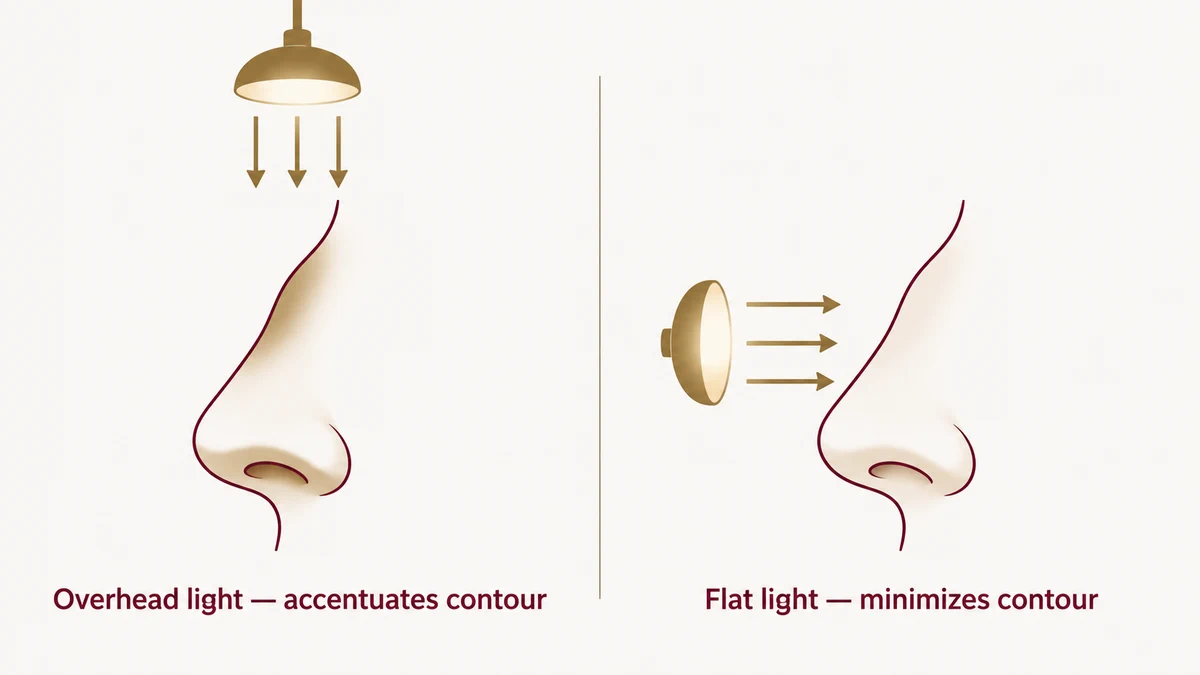
Overhead lighting in the "before" photo creates shadows under the breast that emphasize sagging, while flat, diffused lighting in the "after" photo minimizes shadow and makes the result look smoother. Consistent lighting between both images is a quality signal in a surgeon's gallery. If the lighting setup looks visibly different, the comparison is less informative than it appears.
Timing matters more than you think
A photo taken at 3 weeks post-op, when the breasts are still swollen and sitting high, looks dramatically different from one at 6 months when they've settled into their final position. Galleries that don't state when the "after" photo was taken are less useful — ask. The most informative galleries show the same patient at multiple time points: early recovery, 3 months, and 6–12 months.
Bra, clothing, and framing
Some galleries show "before" photos braless and "after" photos in a supportive bra or bikini top — which obviously changes the apparent shape and position. Others crop the "after" photo more tightly, hiding the lower pole where scarring is most visible. Neither is necessarily deceptive, but being aware of these framing choices helps you distinguish the surgical result from the photographic presentation.
What breast lift photos rarely show
- Scars at full maturity: Most galleries show results at 3–6 months, when scars are still pink and maturing. The scar at 2 years — faded, flattened, but still present — is rarely photographed but is what you'll actually live with.
- Movement and gravity: A static front-facing photo doesn't show how the breast moves, sits in different clothing, or looks when leaning forward. Results are three-dimensional; photos are not.
- Weight change effects: Galleries don't typically include patients who gained or lost 15+ pounds after surgery, which significantly affects how results hold up. Stability of your weight post-surgery matters more than most galleries suggest.
- Implant combination disclosure: Some "breast lift" results actually show augmentation-mastopexy (lift + implants). The added volume from implants creates fullness that a lift alone doesn't produce. Always check whether the result you're admiring involved implants alongside the lift.
The most useful way to evaluate a surgeon's gallery is to focus on patients with a similar degree of ptosis to yours, similar body frame, and results at 6+ months — and to ask directly about anything the photos don't explain.
Frequently Asked Questions
Does a breast lift make breasts smaller?
Not typically. A breast lift repositions existing tissue and reshapes the breast, but it doesn't remove significant volume the way a breast reduction does, and it doesn't add volume the way implants do. Some patients see a very slight size decrease from tissue removed during reshaping, but that's a side effect, not the primary goal.
How long do lift results last?
A lift resets your breast position, but gravity, aging, weight changes, and future pregnancies will continue to affect that position over time, the same as they did before surgery. Most patients enjoy their result for many years, though it's not a permanent stop to the natural aging process.
Will scars be visible?
Yes, to some degree — every lift technique leaves a permanent scar, though the extent depends on how much lifting was needed. Scars typically fade and flatten considerably over the first one to two years but rarely disappear completely — see our guide to breast surgery scars for healing patterns.
How soon will I see my final breast lift result?
Most patients see their settled shape at around 3 to 6 months, once swelling has resolved and the breasts have "dropped" into their natural position. Photos taken in the first few weeks after surgery often show a higher, tighter look that will relax somewhat as healing progresses.
Can a breast lift be combined with implants?
Yes, this combination (augmentation-mastopexy) is common when a patient wants both repositioning and added volume in a single surgery. See our breast lift vs implants guide if you're weighing a lift, implants, or both together.
Is breast lift recovery painful?
Most patients describe the discomfort as manageable soreness and tightness rather than severe pain, typically controlled with prescribed medication for the first several days. Swelling and sensitivity gradually improve over the following weeks as the tissue heals.