A brow lift is often overshadowed by its more commonly discussed neighbor, upper eyelid surgery — but the two address genuinely different anatomy, and confusing them is one of the more common consultation mix-ups on this topic.1 Forehead and brow procedures appear in ASPS annual procedural tracking as part of the broader facial rejuvenation category.2 This guide explains what a brow lift actually repositions, how it differs from blepharoplasty, technique options, the "surprised look" concern, when Botox is a reasonable non-surgical alternative, and links to our cost guide for broader pricing context.
What a Brow Lift Repositions
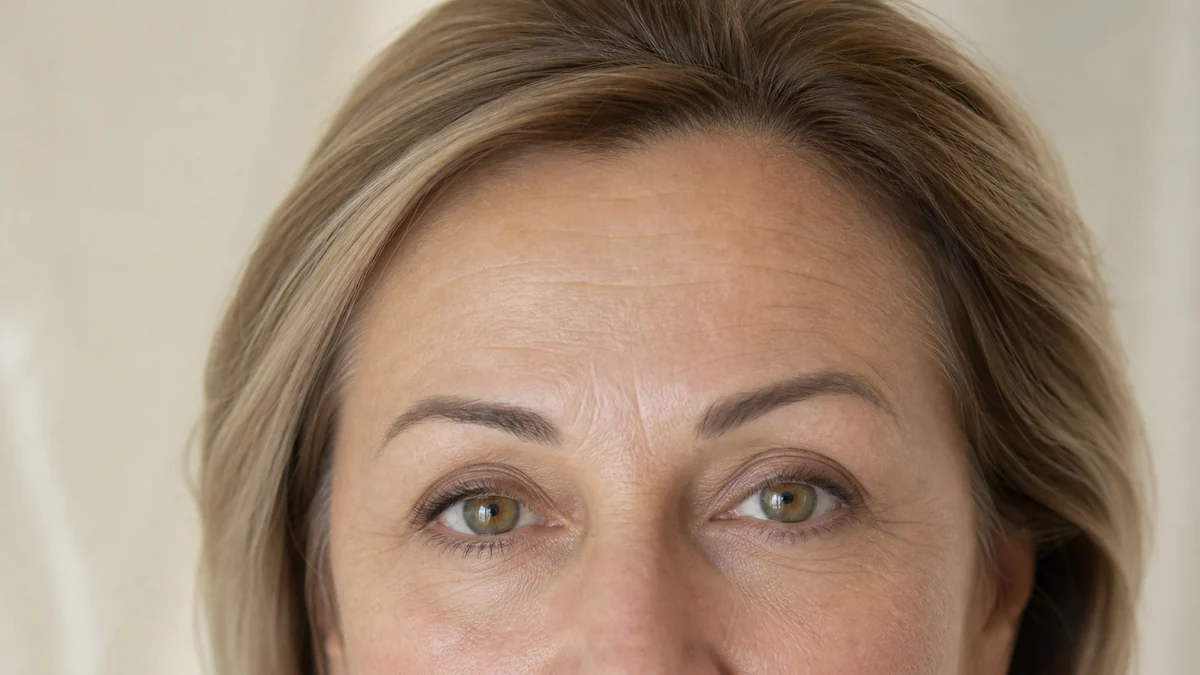
A brow lift raises the position of the eyebrows and can soften the horizontal lines that form across the forehead as the muscles beneath repeatedly contract over decades. It does not remove eyelid skin — that's a separate procedure — but it can meaningfully change how "open" or "tired" the eye area looks, since brow position sits directly above and interacts visually with the upper eyelid.
Functional outcomes research on upper blepharoplasty notes that compensatory brow elevation contributes to headache symptoms in some patients — a brow lift can reduce that strain when low brow position is a primary driver, though the procedures address different structures.3
Brow Lift vs Upper Blepharoplasty — Common Confusion
Because both procedures can improve a hooded, tired-looking eye area, patients sometimes assume they need one when the other — or both — is the actual answer. A low brow position can rest directly on the upper eyelid, creating an appearance that looks like excess eyelid skin but is actually caused by brow height. A careful exam, ideally by a surgeon experienced in both procedures, should clarify which structure — or both — is truly driving your specific concern; see our guide on ptosis versus dermatochalasis for a related eyelid-specific diagnostic distinction.
A simple diagnostic clue: if manually elevating your brow with your finger opens the eye significantly and reduces hooding, brow position may be a major contributor. If hooding persists despite brow elevation, excess eyelid skin is more likely the primary issue.
Techniques & How Results Differ
Endoscopic brow lift uses small, camera-guided incisions hidden in the hairline, generally offering less visible scarring and a somewhat quicker recovery, and suits mild-to-moderate repositioning needs. Temporal (limited) lifts address the outer brow only, for patients whose concern is localized. Open (coronal) lift uses a longer incision across the scalp, allowing more extensive repositioning in select cases but with a longer incision to heal. Your surgeon's recommendation should be based on your specific brow position, hairline, and degree of correction needed.
Hairline position matters: patients with a high forehead may need hairline-lowering techniques rather than a standard brow lift that raises the hairline further. Male patients often require conservative elevation to avoid a feminized brow arch — another planning detail that generic before-and-after photos don't capture.
The "Surprised Look" Concern — Why Over-Elevation Happens
The unnatural, permanently "surprised" appearance some people associate with brow lifts results specifically from over-elevating the brow beyond a natural resting position — a planning and technique issue, not an inevitable feature of the procedure. A thoughtful surgeon plans a subtle, individualized lift that matches your face's natural proportions rather than applying a uniform high arch to every patient.
The Procedure & Anesthesia
Brow lift is typically performed under general anesthesia or deep sedation and takes 1 to 2 hours depending on technique. Endoscopic approaches release forehead tissues through small incisions, reposition the brow, and fix it at the new height. Combined brow lift plus upper blepharoplasty is common when both brow descent and eyelid skin excess contribute to the same tired appearance.
Anesthesia & Operative Setting
Brow lift is performed in an accredited outpatient surgical facility under general anesthesia or deep sedation — not a office-based local procedure given the extent of tissue release and fixation. Operative time runs one to two hours for endoscopic approaches and longer for open techniques. Combined brow lift plus blepharoplasty extends total time but consolidates recovery into one period.
Recovery
Most patients return to non-strenuous activity within 1 to 2 weeks, with numbness or tightness in the scalp sometimes persisting longer as sensation gradually returns. Swelling and bruising typically improve substantially within the first two weeks, though subtle final positioning can continue to settle for a few months.
Days 1–5: Forehead swelling and tightness; head elevation helps.
Weeks 2–4: Return to work for most; avoid strenuous exercise until cleared.
Months 3–6: Scalp sensation gradually normalizes; final brow position settles.
Risks & Complications
Bleeding, infection, asymmetry, and hair loss along incision lines are recognized risks. Forehead numbness is common temporarily; permanent nerve injury is rare but possible. Over-correction producing a surprised look is a planning failure rather than random bad luck — discuss target brow height explicitly during consultation.
Hairline elevation is an intentional or unintentional consequence of some brow lift techniques — particularly endoscopic lifts in patients with receding hairlines. Pre-operative discussion of hairline position prevents post-operative surprise when the forehead appears taller after surgery.
Choosing a Surgeon
Brow lift requires understanding of forehead anatomy, nerve branches, and the visual relationship between brow and eyelid. Surgeons who perform both brow lift and blepharoplasty regularly are better positioned to recommend one, both, or staged procedures. Review photos of patients with similar brow position and hairline — not just generic lifted results.
Longevity & Botox as an Alternative
Surgical results generally last 5 to 10 years, though aging continues afterward. Botox injected strategically can provide a subtler, temporary brow lift effect for patients not ready for or interested in surgery, but it is limited in degree and duration compared to a surgical lift — a reasonable, honest alternative to discuss rather than a direct substitute. Botox to the forehead depressors can elevate the tail of the brow a few millimeters without incisions, though it cannot address significant brow ptosis or deep forehead skin excess.
Combining With Facelift or Blepharoplasty
Brow lift is frequently combined with upper blepharoplasty when both brow descent and eyelid skin contribute to a tired appearance, or with a facelift when upper and lower facial aging are addressed in one operative session. Combined surgery extends total time under anesthesia and recovery complexity — a trade-off worth discussing explicitly when multiple procedures are on the table. See our upper blepharoplasty guide for the eyelid-specific side of brow-blepharoplasty planning.
Age & Timing Considerations
Brow lift candidates are typically in their 40s to 60s with brow descent contributing to a tired appearance, though there is no fixed age cutoff — anatomy matters more than number. Patients in their 30s with genetically low brows may benefit earlier; patients with minimal descent may be better served by Botox alone. Hairline type, forehead height, and gender-specific brow aesthetics should shape technique choice and expected outcome.
Non-Surgical Alternatives
Botox to the forehead depressors and lateral brow can produce a subtle, temporary brow lift — useful for patients not ready for surgery or those with mild brow descent. Neuromodulators do not address significant skin excess or deep static forehead lines the way surgery can. Ultherapy and other energy devices claim brow elevation but produce more modest, temporary change than surgical repositioning for most patients.
Cost
Brow lift in the US typically costs $4,500 to $7,500, with cost increasing when combined with upper blepharoplasty. See our cost guide for a broader comparison across procedures on this site. Endoscopic techniques and temporal limited lifts may sit at different points within that range depending on operative time and whether fixation devices are used. Combined brow-blepharoplasty quotes should itemize each component when surgeons price procedures separately rather than as a bundled fee.
Results & What to Expect
Initial brow elevation is visible once bandages and swelling allow, though final position settles over two to three months. Forehead lines soften when brow elevation reduces chronic frontalis muscle strain, but static etched lines may persist and respond better to resurfacing or neuromodulators than lift alone. Patients with both brow ptosis and deep static forehead wrinkles often benefit from combined surgical and non-surgical planning — discuss both during consultation rather than assuming lift alone resolves all forehead aging signs.
Frequently Asked Questions
Do I need a brow lift or eyelid surgery?
It depends on whether your hooded look comes primarily from a low brow position or from excess upper eyelid skin — an exam measuring brow height relative to the eye socket helps distinguish the two, and many patients actually have some combination of both. Our guide on ptosis versus dermatochalasis covers a related diagnostic distinction that's often part of the same conversation.
Will I look surprised?
An overly "surprised" look results from over-elevating the brow beyond a natural position, which is a technique and planning issue rather than an unavoidable outcome. A skilled surgeon aims for a subtle, natural-looking lift that matches your face rather than a uniformly high arch.
How long does a brow lift last?
Results are generally long-lasting, often cited in the range of 5 to 10 years, though normal aging continues afterward. Botox can provide a much more temporary, subtler lift for patients not ready for surgery, but it doesn't match the degree or duration of a surgical lift.
What's the difference between endoscopic and open brow lift?
Endoscopic techniques use small incisions and a camera-guided approach, generally with less visible scarring and a somewhat shorter recovery, while an open (coronal) approach involves a longer incision across the scalp and may allow more dramatic repositioning in select cases. Your surgeon will recommend based on your specific brow position, hairline, and goals.
How much does a brow lift cost?
In the US, brow lift typically costs $4,500 to $7,500, varying with technique and whether it's combined with eyelid surgery. See our cost guide for a broader procedure comparison.
Can a brow lift be combined with a facelift?
Yes, the two are commonly combined for patients addressing both upper and lower facial aging in one surgical session, though this extends total surgery and recovery time. Your surgeon can advise whether combining procedures is appropriate for your goals and health — combined anesthesia time and swelling affect recovery planning.
Will a brow lift fix hooded eyes?
Only if hooding is caused primarily by low brow position rather than excess upper eyelid skin. Many patients need upper blepharoplasty, brow lift, or both — an exam distinguishing brow height from dermatochalasis determines the answer. See our upper blepharoplasty guide for the eyelid-specific side of this question.
How long is brow lift recovery?
Most patients return to non-strenuous work within 1 to 2 weeks. Scalp numbness or tightness can persist for several weeks to months as nerves recover. Final brow position settles over two to three months as swelling fully resolves — avoid judging early elevation before that settling period completes.